Showing posts with label Thrillers. Show all posts

Saturday, July 9, 2016

Buy This Book


In Thriller Guy’s last blog entry (see below) TG explained why he doesn’t flack his writer friends’ thrillers on the blog. The short version is that when he does he gets nasty emails from readers who bought the book and didn’t like it, usually because most of his friends – even the writers – especially the writers – who buy the recommendation don’t really read many thrillers, even though they think they do. Last week TG suggested helping pal Larry Kahaner out by giving his novel a vote in the Kindle publishing program. Thanks for all of you who did so.

TG would now like to recommend Dodgers, a new novel by writer pal Bill Beverly.  
Why is TG breaking his custom the second time in a row? Because Dodgers is one motherfucker of a book. (In the book business, when a prepublication review for a book comes in, the marketing people always look for a line they can “pull out” from the review to use as a blurb on the cover, usually when the book comes out in paperback. Hence the term “pull out line.”) In this paragraph TG has given Bill and his publisher Crown, a hellofa pull out line. “Bill Beverly’s Dodgers, hailed as “One motherfucker of a book,” by noted book reviewer and blogger Thriller Guy.

You’re welcome, Bill.

Here’s the pitch: A fifteen-year-old LA gang-banger, known as East, is sent on a mission to kill a man who witnessed a crime that involves East’s uncle. The hook is, the witness is hiding in Wisconsin and East has never been out of LA. He and three other young men like him take off on an epic road trip in a van to do the job. On the way to the Midwest and when they arrive, shit happens, as you might expect.

The thing is, Beverly can really write. Not like TG’s alter ego, Allen Appel, whose efforts can be bought here and which in reviews are usually described as “workmanlike” (Hey, workmanlike gets the job done!) but writes like, well, TG hesitates to compare him to anyone because he has his own compelling style, one that leaves you pulling out lines to be mused over and admired from every angle. TG hates the term “literary thriller” because it is usually applied to a thriller that’s authored by a writer who is considered of literary quality, rather than the usual genre ghetto that the rest of us dwell in. This is not the case here. Beverly would be a terrific writer of great quality no matter what sort of novel he was writing. We are lucky he chose thriller as the type if not the genre. It’s sort of like watching someone from your own crappy part of town do well in the larger world. Go get’em, Bill.

TG readers: Go buy his book. You’ll thank me, for a change.


Saturday, January 16, 2016

Better Dead Than Alive

Thriller Guy would like to apologize for being so remiss in posting lately. Most of his blogging energy was used up by Allen Appel over at his memoir blog at http://mylifeinthebigredband.com. That blog is about to go on hiatus, so TG will be back pissing and moaning and bitching about books, authors and the Writing Life again right here.

Thriller Guy was reading a thread about, what else? thrillers on Facebook where a lady,
complaining about how so many big time authors seem to have faded recently, said, “I’ve stopped reading Tom Clancy, he’s just been phoning it in for the last few years.” TG thought this was a tad unjust, seeing as the man has been dead since 2013. And in fact, TG thinks the lady is flat out wrong: Tom Clancy’s book are far better written since he stopped writing them. And TG believes this is true in the majority of cases where a beloved, mega-selling author has brought in hired help to actually write his books for him. Generally, these co-authors or ghosts are better writers than the originals ever were, dead or alive. Full disclosure, TG’s alter ego Allen Appel and several of his friends have ghost-written a number of books, though never for anyone as famous, at least as famous in the fiction world, as Clancy.

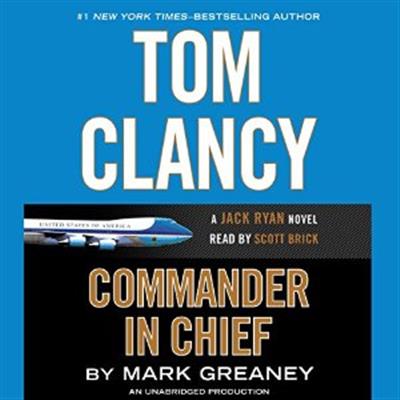
Mark Greaney is the current author of Tom Clancy’s Jack Ryan series and has written, or
co-written, six of Clancy’s novels. Clancy’s first co-author was Larry Bond, who is one of the top military fiction authors in the world today. Other authors who have penned Clancy novels are Grant Blackwood and Peter Telep, both excellent novelists in their own right. These guys are said to make between $40,000 and $70,000 for writing a top author’s books. This is “work for hire,” they generally do not share in royalties.

Greaney has nothing but nice things to say about writing the Clancy series. He started doing it a couple of years before Clancy died, so he had actual contact with the man who he was writing as. TG spoke with Greaney and asked him if he was consciously trying to write in Clancy’s style and he said not really, but that writing in Clancy’s “world” made his work different than when he wrote his own books.

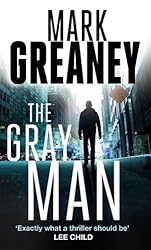
Greaney writes a series known as the Gray Man novels. TG reviewed the most recent book
in the series, number five, Back Blast, and thought it was terrific. Greany can write Clancy better than Clancy could write Clancy, but he really comes into his own when he, well, comes into his own. Greaney’s hero, Court Gentry, The Gray Man, is back in the US trying to find out why the CIA has a standing kill order out on him. To get answers he has to out-think and out-gun the scores of folks from various agencies who are trying to kill him. Gentry is a far more interesting protagonist than Clancy’s Jack Ryan or Jack Ryan’s son, who has taken over the action role in the series. TG recommends readers of these types of thrillers start with Greaney’s latest and if you like it, go back and read the entire series. As far as his Clancy-inspired books go, if you liked them when they were written by Clancy, don’t shy away from them now. You’ve still got many of the old Clancy characters, the plots are huge and Greaney does a great job of hunting down and inserting all the tech and military details that Clancy pretty much trademarked while he was writing the books.


So, to that lady who complained that Tom was phoning them in, give him another chance. He may be dead, but his writing is better than ever.

Thursday, January 8, 2015

Brother Can You Spare a Shiv

Thriller Guy’s writer pal Matthew Quirk writes thrillers. He’s working on his third book, after
The 500, and The Directive, both of which are terrific reads. As a hands-on kind of guy, Matthew has schooled himself in lock picking and other techniques his heroes and bad guys use. He recently wrote a piece for Pacific Magazine that I thought Thriller Guy readers might enjoy. Hang around at the end for a question.

"The stun gun crackled. A masked man ordered me into a van, hooded me, and searched me, then forced me to my knees. The van started moving. Someone put a second hood over my head, then doused it with water. It was getting harder to breathe. An interrogator shouted in my face, barking questions and threats at me and my fellow captives. At one point he threw the rear door open and threatened to throw us out of the speeding vehicle.

Fortunately, I had signed up for this.

I had just begun day three of an “urban escape and evasion course run by a company called OnPoint Tactical, www.onpointtactical.com which offers security and survival training to soldiers and contractors heading into war zones, business travelers bound for kidnapping hotspots, and civilians interested in disaster preparedness. I was here because I write thrillers for a living, and find myself spending an inordinate amount of time in the head of a protagonist running for his life through urban Americas.

Over the last two days we had practiced what to do if pursued or kidnapped in a dangerous city. We learned how to deal with medical trauma; how to improvise weapons; how to kill people; and how to tell when it might be necessary to do so. We learned how to pick locks and handcuffs with improvised tools; how to break out of flexcuffs and rope and duct-tape bindings; how to steal cars, construct fake IDs, run counter-surveillance, make disguises, and talk our way into getting what we want using the techniques of social engineering.

Now, on the final day, we were putting our new skills – well, most of them – to the test.

For the next seven hours, I would pretend that I had been taken hostage by militants in the hostile country of  “Losbekistan” (aka Los Angeles.) I would attempt to escape from my captors, and then try to elude them as I worked through a set of checkpoints and tasks around the city – all without the use of money or phone. Meanwhile, my classmates and I would be hunted by Kevin Reeve, the owner of OnPoint and an expert tracker, along with a few Marine Corps and Special Forces veterans. If they caught us, we were told, they would handcuff us to a fixed object on a public road and leave us there.

During the course, it dawned on me that my survival skills were not all that were being put to the test. I’m a typical up-with-cities young urban dweller. I often leave my windows open at night, and can be careless about locking up my car or house. While I find L.A. to be somewhat intimidating under normal circumstances, I’m usually pretty trusting. Today, though, soldiers with my mug shot would be lurking around any given corner, and the city itself had taken on a more menacing cast. During class, Reeve taught us the survivalist maxim that any given metropolis is just “nine meals away from anarchy.” He described how he always carries several knives and a trauma kit, and how he constantly sizes up passersby as potential threats. He illustrated our coursework with stories about close calls, assaults, and kidnapping attempts in everyday American towns. If there is one guy you want fixated on the worst-case scenario, it’s your survival instructor. Reeve has taught the most elite military units. Given the material, I found him refreshingly free of bluster and macho posturing. But spending a few days under his tutelage made me question an optimism about cities that I wasn’t eager to give up. And now here I was in an urban area of 13 million people with one of the highest rates of gang homicide in the US, blindfolded, about to be set on the run with no car, no money, no phone, and no idea where I was.

After twenty minutes of driving, the van pulled to a stop. Someone shouted “Drone!” and our captors scrambled. We dug for our hidden bobby pins and picks, shimmed our handcuffs, tore off our hoods, and bolted.

My initial sprint brought me to a six-lane boulevard near Home Depot somewhere in Playa Vista. On edge, I tried panhandling – it was one of our assigned tasks – and was rejected every time. I hated it. I got separated from the classmate I had partnered with, and couldn’t find my next objective. On a narrow shoulder under an overpass, I was looking behind me to see if I was being tailed when the mirror of a passing truck nearly killed me. (If someone is following you, it seems everyone is following you.) I was hot, dirty and thirsty. So far, my optimism wasn’t faring very well.

Then I walked down an alley and a homeless couple asked me for a spare dollar. He had face tattoos and was drinking a tallboy of malt liquor. She was smoking a joint. I was wearing a polo and khakis. I explained that I had lost my wallet and needed bus fare (my pretext for begging.) After we talked for a while, they told me that the L.A. bus system had a no-stranded policy, meaning the driver would let me ride if I dropped anything in the fare box. She gave me a penny – the only money I successfully begged all day – and said, “God bless.”

It worked. A moment later I was cruising on the express bus to Venice. I relaxed and started asking for help everywhere. I was amazed by what the city offered up: donuts, coffee, clothes, disguises, a beach umbrella (which helped me blend in near the pier,) material to make lock picks and fake IDs, a lift in a fancy golf cart. With the help of Reeve’s instructions, the streets provided everything I needed.

My only other close call came when I was about to step into a courthouse near Pico Boulevard to change disguise in the bathroom. Suddenly I remembered what I was carrying in my bag: several disguises, lock-picking tools, and a shank I had fashioned out of broken glass and caution tape (another assignment.) I about-faced for the nearest Starbucks.

My last objective was in Santa Monica. I hadn’t been caught and by now I was having a blast. I thought about the people who helped me the most; day laborers, the homeless, the spaced-out dude who volunteered advice when he thought I was improvising a drug pipe from an aluminum can. (I was making a padlock shim.) A lot of them were in situations that, compared to my cushy day-to-day life, would feel to me like a survival scenario, but they didn’t turn tribal or viscous. They bailed me out. I was at the city’s mercy; it turned out I was in pretty good hands."

Thriller Guy here. One of reasons I found this interesting is the way Quirk had to turn to the other side of society, the people who are down and out or just prefer to remain on the edges of what we think of as urban civilization. But these were the people who helped him the most. Which got TG thinking about mysteries and thrillers where plots and locations feature these same folks, and how well these characters work on the page. Several examples spring to mind, David Baldacci’s The Camel Club series set in Washington DC, Robert Tanenbaum’s Butch Karp series, and the early books by Andrew Vachss, the Burke series back when they were good. So here’s the question: what other books, series or standalone, feature street people, the misfits, the crazy, the homeless, those that live in the urban underbelly.


While TG waits for your answer, he’ll practice picking the lock of his handcuffs and making a shiv out of a toothbrush.


Thursday, October 16, 2014

Rapidly Changing Technology


A couple of blog entries ago,  Thriller Guy purportedly answered a question from blog reader Marc who asked “How do writers stay ahead of technology in today's world, where today's new feature is old news next week.” TG uses the word “purportedly” because rather than answering Marc’s question, TG used it as a basis to wander off into a thicket of other ideas, never really addressing Marc’s excellent question. So Marc, the short answer to your question is: they don’t. Or perhaps a better answer would be: it’s impossible anyway, so you can’t really worry about it.

We could just leave it at that and wrap up the blog for this week, but as TG’s regular readers know he would never miss an opportunity to opine and digress and maybe rant a bit. TG would like to put some words in Marc’s mouth, because what TG thinks the question really is about is both the ongoing search for cool technology to hang a plot on and then the rapid descent of that same bleeding edge technology into the ho-hum commonplace. TG has written about this in an earlier blog about the proliferation of drone books in the last couple of years. The first of the drone books presented the new technology in all its gee-whiz glory, but as time went on, the following novels had to elevate the technology by adding new tech elements and/or more convoluted plots that expanded the possibilities of drones beyond their simplest uses.

TG would like to digress for a moment, as you know how he loves to do, with a short discussion of the rather old-fashioned words “gee whiz.” After using this term in the above paragraph, he decided to look it up and found that it is what is known as a “minced oath.” Which means using innocuous words for those that are considered taboo, in this case substituting them for the oath “Jesus Christ.” Here is a short but interesting article on minced oaths. 

Gee whiz, Thriller Guy, you do love to go on and on, don’t you?

Yes.

Will you please get back on topic and answer Marc’s question?

Sure, but first, digression number two, on the subject of drones: While recently reading an interesting thriller where the main character was a woman scientist who built tiny but deadly robots, (This was an excellent book, but TG can’t remember the title) a character was discussing why ordinary people have what seems like an instinctive fear of drones in all forms. “People see them as insects,” the character said. “And in this case they’re insects with guns.” Nice image, nice writing.

So to get back to Marc’s question, yes, thriller writers are always, well, thrilled to come across some new piece of technology upon which to build a plot and thereby a novel. But the professional thriller writer knows that what is new today is not going to be so by the time a book is written and published. You can hope that your tech discovery remains undiscovered by other thriller writers, but the truth is that there are a lot of guys and gals out there who write these kinds of thrillers and who are always combing the Internet for the next big tech marvel, so don’t depend on your chances of keeping your cool idea a secret. If you found it, so did someone else, and maybe he/she is a faster writer than you are.

There’s a corollary problem here that is also interesting. What do you do about Fidel Castro? His name comes up in thrillers quite often, but the guy is 88 years old and in bad health. It takes a regularly published book 12 to 18 months to go from completed manuscript to bookstore shelves, plenty of time for Fidel to drop dead. The best idea is to just not use him in any way in your thriller. Or, as in a thriller TG is currently reading for review, the author just went ahead and said he was dead. It probably looked like a pretty good bet many months ago when the manuscript was turned in to the publisher, about the time Fidel was in dire health straits. But he beat the odds, and now he’s in this guy’s book as being dead, when he isn’t. Does it make a difference? Not really, but little glitches like that always startle a reader out of the suspension of disbelief that writers want to keep them in. There are plenty of other major historical events that can derail a thriller that is in the production process: the Twin Towers can fall, as can the Berlin Wall. Young Kim can be dethroned in North Korea, and even presidents can be felled by assassins. The best you can do is not worry and soldier on.

Now we’ve come to the place where the Association of Those Who Think They Are Experts in Giving Writing Advice (of which TG is a proud member) insists that we say that you shouldn’t be hanging your novel on a cool piece of technology or fabulous historical find and expect that to carry your book onto the bestseller lists or even the Pretty Good Seller lists. We are obligated to remind you that good books are built on the backs of good characters with interesting multi-layered plots and attention to all the details of good writing. Yes, sure, but we’re talking about thrillers here, not the next great American novel. Here comes the rant…

Thriller readers don’t really give a shit about good writing. You can easily learn this by simply reading, say, ten thrillers that are on the bestseller lists. These should be the cream of the vast thriller crop, and yet it is TG’s experience (also vast) that of those ten, one might be considered to have what is considered excellent writing (that is writing that might be commonplace in a work of what we call literature) seven more will fall into the spectrum of damn good to OK to not very good at all, and two will be just plain bad.

Digression number three: In the ten years or so that TG has been in the professional criticism business, he has seen the quality of writing, in general, rise. Snooty critics will tell you that it has fallen, but they are wrong because snooty critics don’t know anything about genre writing. TG attributes this rise in quality to the old timers who really built the thriller genre and are now aging out and hiring other writers to help them or even take over their writing duties. You’ve got guys like Jim DeFelice and Mark Greaney and a bunch of others who are building on already established series characters and venues, guys who are actually better writers than the originals who invented their brands. There are reasons that they are better writers, but that’s a topic for another blog entry that TG may get around to writing some day.

The point is, Marc, and all you other readers and writers out there who have stuck with TG this far, while TG would love to see every book he reads and reviews be a work of excellent craftsmanship, if not literature, that’s not going to happen. So when TG picks up a new book, he is always on the lookout for a really great, new, inventive high tech, low tech, new or brilliantly refurbished plot concept or single device that will be the linchpin that holds the novel together and gives it power. (If a linchpin can actually power anything.) It doesn’t always happen, in fact it usually doesn’t, but smart writers who find such a device, and the lucky ones who hold it close and are first out of the gate with it, are a rare and blessedly fortunate bunch.

So there’s your answer, Marc: pursue this thriller grail, and if you find it, hold it close and write fast. If you can’t come in first with it, try to come in better than the other guys. But if you worry about it, you’re just going to drive yourself crazy. And writers already have enough to drive themselves crazy without adding anything to the pile.

So TG will remodel the mantra:

Sit down, shut up; get to work. And stop worrying.


Tuesday, September 2, 2014

To Err is Human?


Thriller Guy is surprised at his usually perspicacious readers. Last week’s entry had a serious mistake, and only Thriller Guy reader Bill Parke caught it, or at least he was the only one kind enough to send TG a note. Here’s his email, beginning with a quote from TG’s blog entry:

"And one last low-tech tool solving a high-tech problem. When you shoot someone, it’s always smart to clean up your brass before making your getaway: (from the book)  "Behind them, Isfahan climbed out of the sedan with a long device in his hands that looked something like a metal Broom. It was a NailHawg magnetic nail sweeper, used by roofers for collecting loose roofing nails in grass. Quickly and calmly he rolled the device back and forth in the alley where his two colleagues had been standing, and he picked up eleven spent shell casings from their weapons.”"

Bill Parke: This is a good way to see if your readers are paying attention, but you probably it planned that way. If not: Maybe the Nail-Hawg is magico-nuclear (or is it nucleo-magic?), but my spent brass is brass, non-ferrous. When shooting, I always go out in the yard with a 5 gallon bucket because I gotta pick 'em all up by hand. The ones I miss become launch vehicles when I mow the grass.”

When TG read the bit in Mark Greaney’s novel, Tom Clancy: Support and Defend, he realized it would fit nicely into his series of ongoing entries offering up cool techno stuff and ideas for his fellow thriller writers to admire and take advantage of. At the time, TG heard the sound of a faint bell ringing in his subconscious, an alarm that he sometimes gets when something he reads doesn’t “ring true,” but feeling lazy at the time, he decided to just let it go through without checking on it. (Small voice in back of brain: brass is made up of zinc and copper, are either of those magnetic? I don’t think so, but maybe they put some iron in there somewhere in the shell casings.) In any case, the electromagnetic NailHawg is bullshit, but here’s a nifty little device that actually does the job, though it's not nearly cool enough to put into a cutting edge thriller.

All of this begs the question: How did this slip through editing and make it onto the finished pages of the book? Thriller Guy, well, his alter ego Allen Appel, has published many books. (Go to this site to purchase all of his novels on Kindle. You’ll be glad you did.) This was back in the day when the copy editing was done by a band of doughty (when’s the last time you saw that word?) women -- please spare TG the sexist accusations, they were all women as far as TG knows -- who questioned everything. Nothing escaped their intelligent, eagle eyes. TG would sit and cringe as he read their polite but scathing edits, as they eviscerated every page and coolly pointed out his ridiculous mistakes. Every writer TG knows felt the same way; experienced the same shame. And then legacy publishing decided one of the smart moves they could make to raise their profit margins was to fire all the copy editors. This dumbass idea came right after they cut all their author advances by two-thirds. So now books hit the stands with howlers studded into the text like raisins in an oatmeal cookie. Sigh. TG understands he’s geezing here, but does anyone actually give a shit anymore? Evidently not.

One also wonders if Tom Clancy had been overseeing this novel if he would have spotted this mistake. As noted in the earlier blog, TG liked this book. Greaney is undoubtedly a better writer than old Tom ever was. TG has written before (or has he?) that one of the greatest assets that Clancy possessed was that the military loved him and would go to great lengths to accommodate his requests for info. They loved to fill him in on cool stuff that was semi-secret, and allowed him to play with many of their toys: Hey, Tom, wanna drive a tank? Fire a missile? No problemo. Maybe Greaney enjoys this same advantage, along with all the other guys who are now penning the individual volumes in the Clancy empire as Putnam and the other fat cat publishers lay back and roll around in all the dough the guy still brings in.

TG has a suggestion for these fat cats. How about spending a few bucks on some real, old-fashioned editing. Before the Clancy reputation for accuracy migrates down in the dirt with all those pesky shell casings.


Thursday, August 21, 2014

Cool Info For Hot Writers


OK, here’s the thing. Thriller Guy is not going to dump ice water over his own head. TG sends out plenty of checks to various Good Causes and he doesn’t need a video gimmick to encourage him. But the rest of you, feel free to dump away, just stop cluttering up TG’s Facebook page with the videos.

TG’s vacation was good, a few days at the beach, a few days having fun with Mrs. Thriller Guy. Then TG came back to a house with a flooded basement and other problems, but because TG has a cheerful heart he just shrugs off these challenges and climbs back into harness. Today’s blog focuses on some more cutting edge technological advances that savvy thriller writers can use to arm their heroes and advance their plots. Gone are the bad old days when a conscientious writer had to painfully work his way through fifty separate steps to locate a bad guy just to get the action moving. So is the new technology a boon or boondoggle for mystery/spy/thriller writers? Here, in the Guardian, Charles Cumming (an excellent spy novelist, TG says read his books) gives us his opinion, which is, essentially, that LeCarre could have never written The Spy Who Came in From the Cold with today’s available gadgetry. Hmmm, probably, but he would have written something else just as good, which he continues to do to this day. Read the piece and send TG your comments. 
Richard Burton in The Spy Who Came in From the Cold.


The age of fingerprinting was seminal in the history of criminality and in the plotting of mystery novels. The advances in this technology, in particular biometric devices that electronically read fingerprints, has seemingly made some locks pick-proof. But have they? Here are a couple of sites that teach you and your spy/agent/detective/hero how to overcome these sophisticated locks. The following website article will teach you how to defeat these devices with the use of the decidedly low tech Gummy Bear. And if you’re unable to find a bag of these tasty Swedish candies, here’s a site that will show you how to do it with Play-do, Silly Putty,  Elmer's Reusable Adhesive Tac 'N Stik, Rose Art Modeling Clay, or Crayola Model Magic Soft, Spongy Modeling Material.
  
Every writer knows by now the dangers inherent in allowing one’s hero to run around carrying a powered-up cell phone, or any cell phone, even if it’s turned off. And, conversely, how that same cell phone is an incredibly valuable tool in the hands of even the lowest tech investigator. In the same Guardian article, Cumming points out that if you want to know where someone has been recently, simply snatch his or her iPhone and try the following: press "Settings", "Privacy", "Location services", "System services" then "Frequent locations." Try it on your own iPhone and see how it works.

In an article TG was reading about the hacker, Edward Snowden, Snowden suggests that to keep from allowing your or anyone else’s cell phone from broadcasting one’s location, you can simply put it in a refrigerator or even in a metal cocktail shaker. Make sure to remove the phone before making your next martini.

If you’re including a team of Navy SEALS in your next plot (and who isn’t?) you can have
them ride beneath the waves in style with some new, really cool underwater submersibles. 

And if you want your hero to find out what is being said inside a room where you haven’t implanted a listening device, scientists have figured out a way to film an object in the room -- in this case an empty potato chip bag -- and reconstruct sounds that have occurred in the room, even audible speech. Check out this amazing article and video about these experiments.

Then there’s this article whereby scientists where able to figure out something, TG is not exactly sure what, which could be key to a novel-twisting plot point. Maybe you can figure it out and explain it to Thriller Guy. 
TG is reading and enjoying the latest Tom Clancy novel, Support and Defend, written by
Mark Greaney, Clancy having been dead for some years now. This is a continuation of The Campus series. TG was always a Clancy fan, although sometimes very reluctantly. He wasn’t the greatest writer, but then who is? and who needs to be a great writer to pen a perfectly good thriller anyway. What Clancy had, was access. Every branch of the military loved the guy and would sit patiently with him for days and weeks divulging tech info on all their cool weapons systems, even the secret ones, which he would then slot into his novels. So readers were always pretty much guarenteed tidbits and factoids that would astound and amaze. Greaney continues this procedure, and here are a few items that TG is passing along from Support and Defend. TG gives high marks to this book and the series.

In one scene he has his hero, Dominic Caruso, inside a house that is protected by a motion detector: “Dom walked slowly now, his entire body moved less than three inches a second, meaning each step through the house took ten times longer than normal. Off the shelf, motion detectors were typically set to notice movement that tracked faster than three inches a second, so Dom and his teammates at The Campus had spent many silly yet laborious hours of training to defeat motion sensors by walking through the hallways like wind-up toys whose springs had sprung, giving them little energy for movement.”

And more cellphone stuff: “He then carefully opened the back of the phone with a small screwdriver and photographed the number on the SIM card. Dom knew, with the right equipment, the subscriber identity module number could be used to track the phone or trace its usage.” Thriller Guy isn’t actually sure how to go about this tracking, but he is sure there’s a site somewhere on the Internet that gives instructions on how to do so.

And one last low-tech tool solving a high-tech problem. When you shoot someone, it’s always smart to clean up your brass before making your getaway: "Behind them, Isfahan climbed out of the sedan with a long device in his hands that looked something like a metal Broom. It was a NailHawg magnetic nail sweeper, used by roofers for collecting loose roofing nails in grass. Quickly and calmly he rolled the device back and forth in the alley where his two colleagues had been standing, and he picked up eleven spent shell casings from their weapons.”

So there you go, thriller writers, say thank you.

You’re welcome.