Friday, February 19, 2016

To Kill a Writing Prompt

Horton Foote

Reaper Report. Thriller Guy can’t let Harper Lee’s death go by without mentioning that To Kill a Mockingbird was a great book and a great movie. But you knew that. TG recommends reading the screenplay for the movie by the masterful Horton Foote.

Thriller Guy’s pal Larry has a good blog entry over at TheNon-Fiction Novelist about writing prompts. Writing prompts are the little exercises that writing teachers hand out to writing students to get their pumps primed, or something. The idea is, I guess, if you get someone writing anything, just writing, they will then leap into their own work with a sense of purpose and vigor. Bullshit. What a waste of writing time. No real writers do this, trust me. Real writers, fiction or nonfiction, write to earn money, either today or tomorrow, and no one ever made money writing someone else’s idea so they could then be in the mood to work on their own idea. TG is aware there are those of you out there who will now send me yet another of those mewling comments about how you write for “ideas” and for the sheer love of writing, etc. etc. And just because there are those who need a further explanation -- this doesn’t mean that when you’re writing your novel you’re writing with the sole goal of making big money, that a publisher is going to immediately pick it up and buy it (those days are long gone). What writing for money means is that you should write it with enough thought and care to produce a work that a publisher or reader will pay for the pleasure of publishing or reading.

So stop writing little exercises where writing teachers, how-to-write books or websites give you a subject and a time limit and tell you it’s going to be fun. Writing isn’t fun. Just get to work.

But TG would like to suggest that reading the right, or wrong thing before writing can certainly influence one’s writing style, for better or worse. So a few minutes of reading can be very valuable.

TG writes in many different styles. When writing time travel novels one “trick” is to hint at the cadences and styles of the period one is writing in. This is what pal Larry calls writing in “old.” As opposed to, say, writing in Spanish. TG’s alter ego, Allen Appel, gets this process moving by reading letters, newspapers and even novels written in the period in which his novel is set. Even five minutes of this is enough to channel your writing brain into, again, the cadences of the period. You don’t want to copy anything other than the sound and the rhythm.

An extreme example of this recently came Appel’s way. Several years ago he decided to challenge himself by learning how to write a novella rather than a full-length novel. The subject would be the most unlikely he could come up with. The winner? Chickens. Could he write a novella or novellas in several different styles about chickens? Stories that would work as stories and not jokes or simple pastiche? The result was The Christmas Chicken, The Flock, and The Maltese Chicken. (All three novellas are available for Kindle here.)

The Christmas Chicken was recorded by the incomparable Brad Wills and is available on audible.com. Recently Brad decided to record The Flock, which meant that Appel was going to have to go back and re-edit that novella to make sure it was in good shape for recording. At the same time, he has been working on his memoir (a shorter version of which can be read at the blogsite http://mylifeinthebigredband). The memoir is written in, well, memoir style, whatever that is. In this case sort of breezy and humorous. The Flock is written in the style of H. P. Lovecraft, and the two are decidedly different. Here are examples, the first paragraph of each piece.

“So in that summer that was not summer, for the cold never left the land, I went to a deep woods known as Wolfsbane, far from cities and towns, to an odd community that lived with whatever strange Gods they worshipped, wanting to be left alone, the lot of them, and the world was happy for it to be so. They called the Hunter, as others have called before, and I came. But it was not wolves who were the bane of these people, though at the time I did not know that, no, not wolves, not Canis Lupus, creatures who ran the cold woods and howled into the deep dark night, though they be fearsome creatures themselves, but others, far more mysterious, and more terrible. It was these that compelled the people of Wolfsbane to summon the Hunter. And if I knew then what I know now, I would not have responded to that summons. But that is Life, is it not? To never know? Yes, Life. And Death.”


My Life in the Big Red Band.  “It was one week into the first summer of band practice when I
first had my ass kicked. I don’t mean that in the general sense of the term, like being beat up in a fight. I mean having another person literally kick me in the ass. Getting beat up in a fight would be a good way to begin a memoir, but this is nothing like that. Pain, loss, abuse are all perfectly good stories to reveal a life shaped by adversity. God knows enough true stories have begun with a belt, a fist, or a wire hanger smacking a child in the face. But this is anything but that. In fact, it’s the opposite of a life forged by adversity, more a life shaped by mostly good fortune. Where’s the drama in that, you might ask? I don’t know, I guess we’ll just have to find out.”

As you can see, the two styles are radically different. Moving from one to the other was going to screw up the cadence of both of them. What to do? In this case, it was to take the time to stop and read a lot of whatever one I was going to be working on, to expunge the style of the other. I was lucky here, in that I had a sample of the exact style I needed to continue in the style I needed. My own style. So that’s TG’s first piece of advice, and it’s a simple one: Screw the stupid prompts, read your own work before you begin writing your own work. This is what you should be doing anyway: when you begin work you start by editing the work you did the day before. Then when you start in on new stuff, you’re already in your own cadence. TG knows some smarty-pants out there is going to write in and say he/she doesn’t need to do this because he/she always writes in his own style, blah blah blah, but TG contends that in most cases, anyone who sits down to write will have already read something that someone else has already written beforehand. Often it’s the newspaper or even emails, either of which will channel your brain into someone else’s style. Expunge it!

But what if you’re at the beginning of a new piece, so you don’t have your own work to read and mimic? TG suggests spending a few minutes every day before you begin writing reading in whatever style you’re writing in, just to get your writing brain in the proper gear. With The Flock, that meant reading a Lovecraft story every day before working. With the memoir Appel read memoirs in “his” style, My Father’s Eyes, by Mary Bonina, Liars Club by Mary Carr, The Life and Times of the Thunderbolt Kid by Bill Bryson were just a few that he enjoyed before starting his writing day. All were extremely helpful in getting him into the proper brain groove.

So stop with the stupid writing prompts. Grow up and write your own ideas. Unless someone is paying you to write theirs. But read before you write. Your own work if you’ve got it, or those of other writers you think are working in a style that is close to what you are trying to do. Above all…

Sit down, shut up, get to work.


Saturday, January 16, 2016

Better Dead Than Alive

Thriller Guy would like to apologize for being so remiss in posting lately. Most of his blogging energy was used up by Allen Appel over at his memoir blog at http://mylifeinthebigredband.com. That blog is about to go on hiatus, so TG will be back pissing and moaning and bitching about books, authors and the Writing Life again right here.

Thriller Guy was reading a thread about, what else? thrillers on Facebook where a lady,
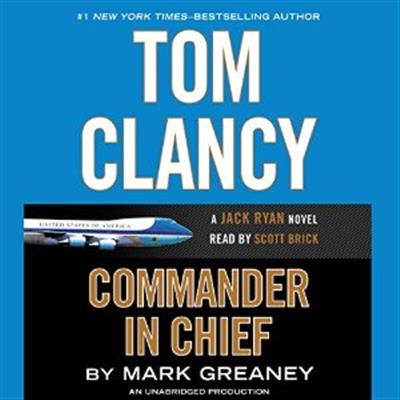
complaining about how so many big time authors seem to have faded recently, said, “I’ve stopped reading Tom Clancy, he’s just been phoning it in for the last few years.” TG thought this was a tad unjust, seeing as the man has been dead since 2013. And in fact, TG thinks the lady is flat out wrong: Tom Clancy’s book are far better written since he stopped writing them. And TG believes this is true in the majority of cases where a beloved, mega-selling author has brought in hired help to actually write his books for him. Generally, these co-authors or ghosts are better writers than the originals ever were, dead or alive. Full disclosure, TG’s alter ego Allen Appel and several of his friends have ghost-written a number of books, though never for anyone as famous, at least as famous in the fiction world, as Clancy.

Mark Greaney is the current author of Tom Clancy’s Jack Ryan series and has written, or
co-written, six of Clancy’s novels. Clancy’s first co-author was Larry Bond, who is one of the top military fiction authors in the world today. Other authors who have penned Clancy novels are Grant Blackwood and Peter Telep, both excellent novelists in their own right. These guys are said to make between $40,000 and $70,000 for writing a top author’s books. This is “work for hire,” they generally do not share in royalties.

Greaney has nothing but nice things to say about writing the Clancy series. He started doing it a couple of years before Clancy died, so he had actual contact with the man who he was writing as. TG spoke with Greaney and asked him if he was consciously trying to write in Clancy’s style and he said not really, but that writing in Clancy’s “world” made his work different than when he wrote his own books.

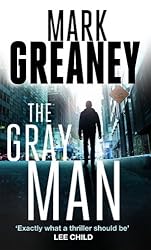
Greaney writes a series known as the Gray Man novels. TG reviewed the most recent book
in the series, number five, Back Blast, and thought it was terrific. Greany can write Clancy better than Clancy could write Clancy, but he really comes into his own when he, well, comes into his own. Greaney’s hero, Court Gentry, The Gray Man, is back in the US trying to find out why the CIA has a standing kill order out on him. To get answers he has to out-think and out-gun the scores of folks from various agencies who are trying to kill him. Gentry is a far more interesting protagonist than Clancy’s Jack Ryan or Jack Ryan’s son, who has taken over the action role in the series. TG recommends readers of these types of thrillers start with Greaney’s latest and if you like it, go back and read the entire series. As far as his Clancy-inspired books go, if you liked them when they were written by Clancy, don’t shy away from them now. You’ve still got many of the old Clancy characters, the plots are huge and Greaney does a great job of hunting down and inserting all the tech and military details that Clancy pretty much trademarked while he was writing the books.


So, to that lady who complained that Tom was phoning them in, give him another chance. He may be dead, but his writing is better than ever.

Monday, December 14, 2015

A Christmas Gift From TG

Thriller Guy in either of his two iterations – TG or Allen Appel – is never above stealing someone else’s blog material to use here, though he always, yes always, declares he is stealing when he does so. Which makes him what? A thief with dubious honor? or simply a writer who is willing to do what it takes to feed the ever-hungry blog entity. But often he runs across blogs and or essays that are simply too good to steal wholesale, or, usually, too long to fit on a normal Thriller Guy template. So TG is going to pass a couple of these along from the actual Internet home where they were originally written so you can go to the source and read them. They’re long, but they’re funny and well worth your time. Besides, what else do you have to do? If you weren’t willing to fritter away your time, you wouldn’t be reading this blog in the first place.

The first is a blog entry at Vulture.com that is essentially about movie scriptwriting, but as TG has tried to make clear over the years, writing Thrillers is essentially another form of writing action movies: the same basic rules apply. Thriller writers are advised to read this very funny essay and follow these rules in their novels. The article is Star Script Doctor Damon Lindelof Explains the New Rules of Blockbuster Screenwriting, by Scott Brown.

The second blog essay is from theawl.com, where Heather Havrilesky talks about the fantastic life of a writer, one who actually works at the craft for money. TG has often written about many of the same experiences as Ms Havrilesky, but she is far funnier. Havrilesky is The Awl’s existential advice columnist. She’s also a regular contributor to The New York Times Magazine, and is the author of the memoir Disaster Preparedness (Riverhead 2011).  

Consider these two essays as TG’s holiday gift to his many followers. And speaking of gifts, what about a Kindle copy of Allen Appel’s The Christmas Chicken for some lucky loved one on your gift giving list? Or how about as an audio book performed by the fabulous Brad Wills. Really, the guy is incredible. If you don’t laugh at his fabulous chicken imitation TG will return your money. (True.) Find the the audio book version here. Start your own Christmas tradition, the yearly holiday reading or listening to The Christmas Chicken.

Or, buy a copy of any of Appel’s novels and preload them on a brand new Kindle for that hard-to-buy-for friend or relative on your list? Trust Thriller Guy, it’s a great gift suggestion.

Really.


Really really really.

Monday, December 7, 2015

The Lie

I saw a notice a couple of weeks ago announcing the anniversary of the death of Wilfred Owen, the British war poet. I asked Thriller Guy if he thought he could write a blog entry about poetry and it’s place in the thriller writing business. We all know TG is One Tough Hombre, but at this suggestion he went and hid in the closet, afraid that I would spill the beans about his writing a poem or two every once in awhile. He’s afraid he might loose his battlefield cred.

Ridiculous. I pointed out to TG that many traditional warriors I have known were poetry fans, particularly of Owen’s poetry. Here’s piece about Owen’s death in World War I, 1918.

“In the days before his death, Owen had been excited because he knew the war was almost over. The Germans were retreating and the French had joyfully welcomed the British troops. In his last letter to his mother, Owens wrote: "It is a great life. I am more oblivious than yourself, dear Mother, of the ghastly glimmering of the guns outside, and the hollow crashing of the shells. Of this I am certain: you could not be visited by a band of friends half so fine as surround me here." A few days later, he was trying to get his men across a canal in the early morning hours when they were attacked by enemy fire, and Owen was fatally wounded. The war ended the following week.”

I have suggested elsewhere that a good way to start one’s writing day is to read a poem before beginning the day’s work. I have found that whatever one reads, fiction or non-fiction, before one begins, can influence the style of the work that comes after. Maybe not overtly, but at least subtly, and the stylistic mannerisms can hang on for longer than one might suppose. Of course this can be “fixed” in rewrites, but it’s better to go into the work as clean as possible. This suggests that a good way to start is to read nothing at all, but TG and I read the newspaper at breakfast first thing in the morning so my/our brain is already tainted when I sit down to work. My solution is to read a poem before beginning. The easiest way to do this is to sign up for Garrison Keillor’s The Writer’s Almanac which comes in your email and begins every day with a poem. Because they’re the ones choosing the poem, you don’t have to worry about finding one on your own. Another benefit is if you do like a particular poem, you can buy or lookup other work by the same poet.

You might think that you would then be in danger of picking up a particular poetic style that would ride on the back of your own words when you start to work, but I have found that this doesn’t happen. But there is a particular sensibility that does crossover, and that is a good thing. I can’t exactly name what this effect is, but it’s not harmful and, I have found, gives a sort of ease that works in your favor, especially when you are starting out the day. And if you warriors out there are afraid that your savage prose will be enfeebled by the poetry, you can always read the many war poets who have written throughout history. A good place to begin is with the site http://www.warpoetry.co.uk/index.html

Here’s a bit of Wilfred Owen to get you started: his poem, Dolce et Decorum Est. The Latin title comes from the phrase from the Roman poet Horace: “It is sweet and fitting to die for one’s country.” Read the poem and see how Owen puts the lie to that sentiment. And try reading the poem before you begin your next day’s writing, or any other poem, to see how it works for you.

You can come out of the closet now, Thriller Guy.

Dolce et Decorum Est

Bent double, like old beggars under sacks,
Knock-kneed, coughing like hags, we cursed through sludge,
Till on the haunting flares we turned our backs,
And towards our distant rest began to trudge.
Men marched asleep. Many had lost their boots,
But limped on, blood-shod. All went lame; all blind;
Drunk with fatigue; deaf even to the hoots
Of gas-shells dropping softly behind.

Gas! GAS! Quick, boys!—An ecstasy of fumbling
Fitting the clumsy helmets just in time,
But someone still was yelling out and stumbling
And flound’ring like a man in fire or lime.—
Dim through the misty panes and thick green light,
As under a green sea, I saw him drowning.

In all my dreams before my helpless sight,
He plunges at me, guttering, choking, drowning.

If in some smothering dreams, you too could pace
Behind the wagon that we flung him in,
And watch the white eyes writhing in his face,
His hanging face, like a devil’s sick of sin;
If you could hear, at every jolt, the blood
Come gargling from the froth-corrupted lungs,
Obscene as cancer, bitter as the cud
Of vile, incurable sores on innocent tongues,—
My friend, you would not tell with such high zest
To children ardent for some desperate glory,
The old Lie: Dulce et decorum est
Pro patria mori.


Friday, November 27, 2015

The Secret

In the six years that Thriller Guy has been lecturing from this particular pulpit he has, many times, repeated his mantra: Sit down; Shut up, Get to work. In the early days this no bullshit advice was relatively rare. Most writers of the self-help writer’s advice manuals used kinder and gentler terms to encourage would-be writers to do the work of writing. Perhaps it simply became clear that pats on the back and gentle words of encouragement had little effect on writer behavior or maybe book bloggers and self help gurus just decided to copy Thriller Guy, because that’s the way a lot of people get their material. When they can’t be original, they steal. So they got tough. At any rate, TG is no longer going to slap people around to get them to work. There will still be thousands of unoriginal book blogs and books telling you the same five things over and over (First drafts don’t have to be good, Write two pages every day, etc, etc.) Listen up aspiring writers, either do what needs to be done, or not; TG doesn’t really give a shit. So to all those out there who can’t seem to figure out how the process works, let’s let Neil Gaiman (who was the subject of last week’s entry) have the last word. Here’s everything you need to know to become a successful writer. Take it away, Neil…

Write the ideas down. If they are going to be stories, try and tell the stories you would like to read. Finish the things you start to write. Do it a lot and you will be a writer. The only way to do it is to do it.

I’m just kidding. There are much easier ways of doing it. For example: On the top of a distant mountain there grows a tree with silver leaves. Once every year, at dawn on April 30th, this tree blossoms, with five flowers, and over the next hour each blossom becomes a berry, first a green berry, then black, then golden.

At the moment the five berries become golden, five white crows, who have been waiting on the mountain, and which you will have mistaken for snow, will swoop down on the tree, greedily stripping it of all its berries, and will fly off, laughing.

You must catch, with your bare hands, the smallest of the crows, and you must force it to give up the berry (the crows do not swallow the berries. They carry them far across the ocean, to an enchanter’s garden, to drop, one by one, into the mouth of his daughter, who will wake from her enchanted sleep only when a thousand such berries have been fed to her). When you have obtained the golden berry, you must place it under your tongue, and return directly to your home.

For the next week, you must speak to no-one, not even your loved ones or a highway patrol officer stopping you for speeding. Say nothing. Do not sleep. Let the berry sit beneath your tongue.

At midnight on the seventh day you must go to the highest place in your town (it is common to climb on roofs for this step) and, with the berry safely beneath your tongue, recite the whole of Fox in Socks. Do not let the berry slip from your tongue. Do not miss out any of the poem, or skip any of the bits of the Muddle Puddle Tweetle Poodle Beetle Noodle Bottle Paddle Battle.

Then, and only then, can you swallow the berry. You must return home as quickly as you can, for you have only half an hour at most before you fall into a deep sleep.

When you wake in the morning, you will be able to get your thoughts and ideas down onto the paper, and you will be a writer.

And if all of that seems too difficult, you can just, well, Sit down; Shut up: and Get to work. 


Thursday, November 12, 2015

If You're So Smart, Why Ain't You Rich?


Pity the poor book reviewer. Authors love him if the review is good; revile him if there’s the slightest hint that a book is flawed. Underpaid, (if paid at all) and usually characterized as a failed writer… “If he’s so smart, why doesn’t he write his own book? And why isn’t it a best seller?” I have been asked many times if reviews matter. After having written just shy of a thousand book reviews for many publications, I think I have an answer: Maybe. Sometimes. It depends.

Amazon publishing and book selling certainly changed the landscape of traditional book reviewing. For hundreds of years book reviews appeared in newspapers and journals and sometimes magazines and pretty much nowhere else. These publications, some impressive and powerful, some not so much, were the most important places (and usually only places) to get the word out by publishers and authors that a book had come on the market. For the last fifty years or so, the three most important publications were Publishers Weekly, Kirkus, and Library Journal. If you got a good review from all of these three, your book was pretty much guaranteed to do well. Even if it didn’t sell as many copies as you hoped, you had excellent blurb material for the softbound version when it came out, and publishers were more inclined to accept your next effort if your first received this sort of critical reception. Of these three, only Publishers Weekly remains really relevant.

Then along comes Amazon and book reviewing becomes something new, more a matter of numbers rather than content. Reviewing is no longer the sole province of professional reviewers – who are often authors themselves -- but the territory of regular readers as well. If you love a book or hate a book you can go on Amazon and express your opinion, and other readers can make decisions of whether to buy and/or read a book based on what someone who is more like them has to say. These reviews have become one more weapon in Amazon’s powerful arsenal aimed at the heart of mainstream publishing. Almost all the self-help independent publication gurus advise that you do everything possible to convince people to give your book a good review on Amazon. The more reviews, the thinking and advice goes, the more copies you’re going to sell, and then the more good reviews you’re going to get. This, of course, has led to cheating and inflated numbers, a subject that I’m not going to go in to, but in general I think that this conventional wisdom is correct: Amazon reviews lead to Amazon sales.

But how about reviews for the really big guys, writers like Stephen King, Brad Thor, Donna Tart, Tom Clancy, etc. Do those people really give a shit? It’s my experience that they actually do. I’ve reviewed and interviewed some of the biggest in the business and they have always been seemingly happy to oblige my requests, been free with their time and willing to answer questions that they’re sick of answering. It seems as if the universal desire to be loved and admired remains strong in all of us. Everyone hates to be told their work sucks, even if that work has brought in boatloads of money.

Some years ago I went to the National Book Festival in Washington and stood in line to have a book signed by Neil Gaiman. I confess, I haven’t read his work extensively, but readers love him, and I really liked his book, The Anansi Boys. Here are a couple of lines from my starred review. “If readers found the Sandman series creator's last novel, American Gods, hard to classify, they will be equally nonplussed—and equally entertained—by this brilliant mingling of the mundane and the fantastic.” And… “But it's Gaiman's focus on Charlie and Charlie's attempts to return to normalcy that make the story so winning—along with gleeful, hurtling prose.” So I decided to go to the book festival and ask him to sign my ARC (Advance Readers Copy) of his novel.

I went with my wife, and we were both nonplussed to see the line waiting to speak to Gaiman. It must have stretched as long as a couple of football fields, but I settled in and it inched forward. It took two hours to get to the signing table, and along the way I met many Gaiman fans who all had something he had written to sign. They were all impressed that I had a review copy of Anansi Boys, and it was passed along up and down the line to be looked at. You had to hand your book to be signed to one of his festival helpers, and when she set it on the table in front of him Gaiman appeared puzzled and looked up at me with a frown. I said, “I’m your ____ _____ reviewer.” He stood up, (he’s really tall) came around the table and hugged me. “You wouldn’t believe how much you’ve changed my life,” he said. Well, that was a nice surprise.

He said that before the review I gave him, his publisher saw him in as an up-market comic book guy, a writer who wasn’t basically serious. After the review, they decided to deal with his work in a more serious manner. One immediate pay off was that they were no longer going to put a lightening bolt (a “goddamn lightening bolt,” were his words) on the covers of his books to point up the otherworldly, fantasy aspects. We shook hands and he said if I ever needed anything, to let him know. As I walked away, the folks in line looked at me, awestruck. Well, maybe not awestruck, but with admiration. As did my wife, who had witnessed the whole scene. Suddenly the critic gets some respect. It felt good.

So in answer to the question, do reviews matter to the Big Writers? The answer is yes, maybe, and it depends.

You just never know.