Showing posts with label Fifty Shades of Grey. Show all posts

Wednesday, March 11, 2015

Fifty Shades of Who Gives a Shit

Do you know how hard it is to keep a good rant going? It’s not easy. Thank God there’s gin to fuel the fires of righteous indignation. TG has been getting mail of the -- “Well, TG, I didn’t think you were the type of guy who would love a book like The Fifty Shades of Grey” – variety. These people don’t seem to understand the thinking behind this ongoing rant, so TG will briefly explain it one more time. Try to stay with him…

TG did not love Shades. It was perfectly fine and hit all the buttons that a hundred million women wanted hit. (Which says a lot about the state of the average American male and his inability to give women what they are looking for. But that’s another rant.) What upsets TG, is handing literary book reviewers the job of reviewing the Fifty Shades book, and the movie, almost all of whom pronounced the results as “terrible.” Fortunately, this method of assigning reviews is not a normal practice. Magazines and periodicals and websites don’t usually assign literary critics to review popular fiction. But once a book becomes a phenomenon, in this case by selling a hundred million copies, everyone feels the need to weigh in. And when weighing in they usually assume a superior attitude and proceed to point out the many failings that we, the  unwashed are prey to because of our taste in popular fiction. This is what TG objects to: the unfair opinions that we are inferior and they, with their literary tastes, are superior.

Example. Here’s that pompous ass Harold Bloom on Stephen King. “That [the National Book Foundation] could believe that there is any literary value [in King’s body of work] or any aesthetic accomplishment or signs of an inventive human intelligence is simply a testimony to their own idiocy.”

TG had a long list of items like the above Bloom quote that he was going to put in this entry: definitions of different types of fiction, lists of popular novels that had earned a hundred million readers over the years, much shorter lists of successful literary novels, but, as always, he’s lost all of these various pieces of info and he’s too damned lazy to look it all up again. So he’s going to go straight to the genesis of the rant, which is…

The Honey Badger.

Because, my friends, the Honey Badger Just Don’t Give a Shit.

If you don’t know what TG is talking about, go here and watch the short Honey Badger video.

Here’s the point: popular entertainment, be it books, films, music, art or any other form of popular culture, is the Honey Badger. Fifty Shades of Grey, 100 million women strong, is the Honey Badger. Stephen King is the Honey Badger. So to the high minded, the superior, those that feel the need to tell the rest of us how we are small-minded and our tastes inferior, be aware of the following.

We are the Honey Badger.


And we really, truly, do not give a shit what you have to say.


Tuesday, March 3, 2015

Fifty Shades of Please Shut Up: Part Two

Thriller Guy continues his rant…

Read the last entry if you haven’t already read it. Here’s the recap for those of you who are too lazy to 
read it: TG is pissed off about movie reviewers trampling all over the Fifty Shades of Grey book instead of reviewing the movie. TG is also (still) pissed off about snooty book critics who can’t separate their feelings of elite sophistication from understanding just what general readers want in a novel. TG is also pissed off about how those same reviewers (almost all women) are saying, in effect, that two hundred million women are stupid, deluded dupes because they loved a book because of story and subject matter and characters that appealed to them instead of rejecting it because, as they say, it was terribly written.


Thriller Guy is a professional book reviewer. Most people think this means he sits on his reviewing throne and tells the world which books are bad, and which books are good. In fact, as regular readers of this blog have read before, he almost never does that.

TG reviews a book to let readers know if the book under review is the sort of book that that particular read will like. These days Thriller Guy reviews, mostly -- you guessed it -- thrillers. Which means he is telling thriller readers if the book under review is a good example of the genre and what particular characteristics make it interesting and move ahead, or fall behind other books. Some genre readers are able and like to wander out of their particular preference on occasion, but the truth is romance readers don’t usually pick up thrillers any more than thriller readers like to settle in with a good bodice ripper. The same can be said of mystery readers, cat book fanciers, science fiction and fantasy aficionados and any other genre that has its own sets of rules and regulations, no matter that the publishing industry is always trying to lure readers into crossing genre lines.

In the last blog, TG said that many bloggers wrestle with the question: What is bad writing and what is good writing? TG thinks it’s time to stop using Good and Bad as the terms that are branded on books by bloggers and reviewers, as if the book’s writer is personally evil or angelic. Here’s the deal:

Some writers are adept, and some are inept.

The lucky ones, those who are adept, often seem to be born with a facility for words. Others, the inept, have the desire but not the experience or the know-how. These folks can, in most cases, learn how to write fiction well enough to put out a book that falls into TG’s “perfectly fine” category. Here the writing gets the job done, the story told. Often all these people need is an honest editor willing to work with them and the writer’s acceptance of what the editor tells him or her. Lots of sites on the Internet offer these services, and while it’s possible to get scammed, and some editors are surely better than others, it’s really not that hard to pick one that is going to do what needs to be done to pull inept writing into the acceptable zone. There are also many book blogs that offer excellent advice. Put in “writing blogs” as your search term and you’ll have plenty of excellent material to read. TG’s writer pal Larry has a good one over at The Non-Fiction Novelist. His latest entry talks about how independent writers need to do a better job of producing quality writing. Good vs. Bad writing.  Or in TG’s terms, adept vs. inept writing.

TG has often pointed out how difficult it is to write a novel. It’s not that difficult to write, pretty much anyone can write sentences and paragraphs and make themselves understood. What’s truly difficult is to write 100,000 words and put them together in a way that makes sense, follows some simple rules of structure and follows as well simple rules of grammar and tells a compelling story at the same time, simply because that’s so many words. The sheer length is daunting. Writing a novel takes, on the average, a year of steady work. Most people can’t do it because they don’t have the strength and the determination to see the job through. Those that love the form but don’t have the strength, often become academics and/or book reviewers. Yes, that’s a cheap shot, but TG couldn’t resist, though he has noticed books by well-known book reviewers are usually duds. TG will refrain from specific examples to keep the fragile peace that exists in the reviewing community.

Perhaps that’s one reason book reviewers are so hard on novels that achieve great commercial and popular success. Because deep (or not so deep inside) is that little voice that whimpers, I could do that, that could be me, I’m a better writer than they are. And that rankles and burns and can never be admitted. So TG says, all you out there who declare the writing in Fifty Shades “terrible,” why don’t you give it a try? Maybe you’ll get yourself 100 million readers.

Nah, you won’t. You haven’t got the guts.


P.S. No, TG has not forgotten the Honey Badger. Stay tuned.


Friday, February 20, 2015

Fifty Shades of Shut Up


Because TG’s rant is going on too long, he will be splitting this one up over the next week or so. Stay tuned.

Here’s the lesson for the day, brethren: Honey Badger Don’t Give a Shit. For those of you who don’t understand this reference, TG will explain it later.

The Fifty Shades movie is out and every film reviewer is in total agreement: the book sucked. Wait a minute, what about the movie? No, it’s the first thing they gleefully point out, and usually the last. The movie review seems almost secondary because all the critics, pundits, and essayists who are teeing off over the Shades phenomena have to first establish their own bona fides, both professional and personal, by pointing out that the book is abysmally written porn trash and not the sort of thing they would ever read unless forced to. These protestations are so snide, so superior, so smug and so afraid. They scream, I’m smart! I’m sophisticated, sex writing doesn’t turn me on, I’m way too cool for that! Then they go on to trash the movie, though most of the ones I have read say one of its biggest faults is that it isn’t sexy enough. (!)

This blog is not meant to be an apologia for Fifty Shades of Grey. Any one who read TG’s thoughts on the book knows that TG felt the book was perfectly fine, the writing got the job done, the sex was pretty mild, and there was no real reason for anyone to vilify the book beyond the reviewer’s own discomfort with erotica.

Of all the reviews TG read, only one admitted any favorable reaction to the book (it made her feel “tingly”) and that reaction was against her will as she, too, thought the writing was terrible. The pejoratives are uniform in their invective – horrible, primitive, ridiculous, stupid, pornography, trash and on and on. Sophisticated intellectual readers greet these pronouncements with a smug nod of the head. But TG, who is a professional (don’t try this at home, kids) reads all kind of books, most of them thrillers that would be considered military adventure pornography by these very same people, and he knows from vast experience in the book business, that the real emotion that comes through loud and clear, to those who know the writing biz, is…

Envy.

Oh, how writers envy the success of other writers. They are a lonely, bitter lot. Economic success, critical success, any success that is not their own brings the bitter taste of jealousy to their lips. They smile a thin smile of false friendship and imagine driving a dagger deep into the bowels of the beaming successful writer. You’ll never hear anyone but TG say these things, because writers pretend to be one big happy family of kindred souls, but remember, TG is the only one who will never lie to you about writing and the writer’s life. When someone like E. L. James comes along and cranks out three volumes of Fifty Shades and sells a hundred million copies most writers die inside and wail to themselves, “The writing is terrible! I could have done this! I am so much better than she is! Why didn’t I do this! Why wasn’t it me! Why? Why?" They did the same thing to Stephen King and Dan Brown and every other author who has had great success. It’s a wonder they haven’t taken their knives to poor Harper Lee.

So then someone assigns them the book to review or they take the book up on their precious blogs and sniff about how terrible it is, shocking in its writerly badness, beneath them and every other intelligent reader.

What irks TG (some of you will point out that everything irks TG) is the lack of fairness and the misconceptions that high culture critics (and almost all critics think of themselves as arbiters of high culture) make when it comes to the reading habits of their inferiors, and nearly all of us are their inferiors. Bad writing, bad novels, genre writing, independent publishing are all present day rocks that their tidy, self-centered ships founder upon. So tell us TG, just exactly what is a bad book?

There have been lots of book bloggers who have wrestled with this conundrum: what is a good book and what is a bad book. The success of James and other independent writers who publish their work themselves on Amazon and elsewhere beg this very question. So reviewers and bloggers ask it, then make an attempt at an answer. But no matter how close they come to explaining what makes good and bad writing (and there are some very good answers to this question) they are missing a valuable point. The mistake they are making in answering is the question itself: They see it simply from their own viewpoint -- what is good or bad writing to them and to other professionals, and to sophisticated, intelligent, educated readers like themselves. It’s a perfectly good question to ask, but in the context of a vastly successful popular novel it's the wrong one. Here’s the real question.

What is a good book, and what is a bad book to people who actually buy books to read for enjoyment. Not for review. Not to criticize. But to enjoy. Here’s the answer: Listen up all you smarty-pants book professionals out there.

To general readers, the people who are the economic backbone of the publishing industry, a good book is one they like, and a bad book is one they don’t like.

It’s that simple.

TG has said this before many times: 90% of the time it doesn’t make a goddamn bit of difference how good the writing is. If you’re a reader who wants stories about dinosaurs having sex with teenage girls, you’d read those stories if they were carved out of bars of soap. And enjoy them.

100 million readers, most of them women, wanted to read a book about a woman having sex with a fabulous-looking man who was rich, suave, and wealthy, who brought along a little something extra to the bedroom, a little bondage and discipline, which made the sex even better. Forbidden. Hot. And TG would bet that the number, 100 million, is actually much larger, maybe two hundred million, because this is the kind of book that gets passed around from hand to hand, woman to woman. Not everyone has the guts to go to a bookstore and buy a book that has been proclaimed, trashy, pornographic, and that sin of all sins, badly written. Thank God these buyers could go to Amazon and have their copy shipped to them in a plain brown wrapper or delivered to their ereader.

Once again…

100. Million. Readers.

That’s the Honey Badger folks. 100 million readers. Check back in a few days and see why he just doesn’t give a shit.


Tuesday, September 23, 2014

From 7th Century Irish Monks to Fifty Shades of Grey


Thriller Guy’s sermon, lecture, rant of the day sprang (sprang?) from a remark by one of his readers, and after research -- too much research -- splintered into a number of blogs that began to circle on TG’s computer screen. Eventually, after a journey through 20 or so centuries, we end up home. So buckle your seatbelts and put on your thinking caps, you’re in for a bumpy read.

Blog reader and writer pal Mark sent TG this suggestion in an email.  “I have been wondering about whether mathematicians still write their formulas on chalkboards or greaseboards. I have a scene in my novel with dueling mathematicians and needed to know. Turns out they mostly do it on computers these days, but some old school types still like the smell of chalk dust. Anyway, it begs the question, how do writers stay ahead of technology in today's world, where today's new feature is old news next week. Tell us, oh Thriller Guy, what's a diligent author to do in this golden age of discovery?” For some reason this sent TG’s mind into the world of technology and how these days we usually consider that word in terms of computers, iPhones, stealth airplanes, advanced medical procedures, electric cars, self driving vehicles, etc. etc. Machines, in other words. But TG began thinking of the technology of deep time, i.e. the invention of copper allowing ancient Egyptians the technology to make saws that could cut giant blocks of stone, which could then be piled up into pyramids, and other ancient technologies which were modern and cutting edge for their time. But not necessarily machines or physical objects. Technology that springs directly from the intellect. For example…

Blog Number One. Around the year 370 A.D. Augustine of Hippo, who was not yet a
St. Augustine
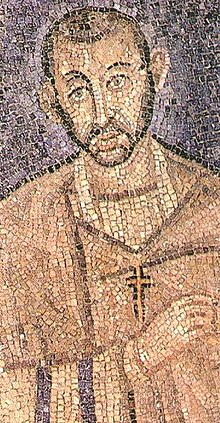
St. Ambrose
Christian nor a saint but a famous philosopher, had gone to see Aurelius Ambrosius, who was later to become a saint himself, Ambrose, in Milan. Ambrose was very famous, and it was the custom to allow people to come into the rooms of the famous and stand and watch them as they went about their business. The rule was you couldn’t speak or in any way interrupt these great minds while they were at work. So there’s Augustine, standing in a small crowd of people, watching Ambrose reading a book. After a few minutes it came as a shocking revelation to Augustine that Ambrose was not only reading his book in complete silence, he wasn’t even moving his lips!  Augustine would write about this at a later date, saying, “Now, as he read, his eyes glanced over the pages and his heart searched out the sense, but his voice and tongue were silent.” What struck TG as amazing was the realization that silent reading was an “invention,” that Ambrose was seeing something he had never seen before and until this time did not exist. Up until then, everyone read out loud. (For a number of reasons that TG will get to.) So silent reading itself was a kind of “technology,” an invention. But before TG could write about this, he needed to do some research to get his dates and other facts correct, which led to…

Blog Number Two: research, and the dangers, pleasures and profits of submerging oneself into the warm, distracting intellectual pools of the Internet and its wonders. TG is intimitaly familiar with this danger, or at least his alter ego Allen Appel is. Appel is, among other things, an historical novelist. (See and buy his Pastmaster time travel series here. You’ll be glad you did.) Historical novelists spend huge swaths of time on the Internet looking stuff up. Imagine the face of a clock in an old movie as the hands circle the clock face indicating hours flying by by as TG starts out to look up a few simple dates and along the way wastes an entire day
Lincoln's boots
on this blog post instead of reading the books he is paid to read or writing the book he has pledged to write. And it is always thus: when writing a novel you stop to look up the size of Lincoln’s boot and surface back to reality  hours later, dazed, but now knowing everything from the invention of shoes to the amazing modern day technology -- there’s that word again -- of the shoemaking industry. (For the record, Lincoln wore a size 14.)


Back to Augustine and Ambrose. Some interesting facts, because there are always interesting facts; who can resist them?

Ambrose: There is a legend that as an infant a swarm of bees settled on his face while he lay in his cradle, leaving behind a drop of honey. His father considered this a sign of his future eloquence and honeyed tongue. For this reason, bees and beehives often appear in the saint's symbology. He is alleged to have founded an institution for virgins in Rome. Because he refused to be drawn into a conflict over which particular church had the right liturgical form, he said, "When I am at Rome, I fast on a Saturday; when I am at Milan, I do not. Follow the custom of the church where you are." Which has come down to us as the saying, “When in Rome, do as the Romans do.”

Augustine. From Wikipedia: “As a youth Augustine lived a hedonistic lifestyle for a time, associating with young men who boasted of their sexual exploits with women and men. They urged the inexperienced boys, like Augustine, to seek experience or to make up stories about their experiences in order to gain acceptance. It was during this period that he uttered his famous prayer, ‘Grant me chastity and continence, but not yet.’ At about the age of 19, Augustine began an affair with a young woman in Carthage. Possibly because his mother wanted him to marry a person of his class, the woman remained his lover for over thirteen years and gave birth to his son Adeodatus who was viewed as extremely intelligent by his contemporaries. In 385, Augustine abandoned his lover in order to prepare himself to marry an heiress.” His conversion to Christianity was prompted by a childlike voice he heard telling him to "take up and read" (Latin: tolle, lege), which he took as a divine command to open the Bible and read the first thing he saw. Which was, “Not in rioting and drunkenness, not in chambering and wantonness, not in strife and envying, but put on the Lord Jesus Christ, and make no provision for the flesh to fulfill the lusts thereof.” So that was the end of Augustine’s life of concubines and lechery. His feast day is August 28, the day on which he died. He is considered the patron saint of brewers, printers, theologians, and sore eyes.

Back to Blog Number One, about technology. When reading about the invention of silent reading, I learned that until the 7th or 8th century all writing -- and by this I mean Latin writing -- there were nospacesbetweenthewords. Think about that. Because books were dictated aloud, the scribes, usually monks, wrote everything down in one long continuous line. (Scripto Continua.) Because when we speak there are no spaces between our words. And it was worse than that, they also didn’t use any punctuation and there was no upper and lower case. But it was the spacing between words thing that led me to…
Blog Number Three: Whereby Thriller Guy continues his rave against those writers who are still putting two spaces between sentences. This practice has often been said to stem from when writers wrote on typewriters, which use what is called a monofaced font. But in reality it goes back centuries before that in rules for typesetters who felt that the extra space between sentences made text more readable. This practice was adhered to until just after World War II when it was abandoned by typesetters, only to be continued by writers using typewriters. Now, in the computer age when spacing is no longer a problem, the only writers who do it are folks who refuse to change, showing that they are old both in years, and old in that they are resistant to change. Thriller Guy has been told that when an editor receives a manuscript where a writer does this, they almost always immediately reject it. So stop it! you idiots, because, as TG has written a number of times, (Blog Number Four) that writers have to perfect their manuscripts in all ways before sending them out. No matter how they may cry out in protest, TG feels that working editors in major publishing houses aren’t looking for great manuscripts to publish, they are looking for ways to reject those manuscripts that are sent to them. And if you show that you’re old fashioned and hard headed, your manuscript is going to get rejected by editors and agents alike. This also extends to those dopes who send TG manuscripts whereby they have decided not to use quotations marks to indicate dialogue, write in second person present tense, or do other foolish stunts because they think it makes them look cool.
It doesn’t.
Which takes me back in full circle to Blog Number One: spacing between words and the invention of silent reading. It turns out that separating the words was an invention of Irish scribes, for a number of reasons. (By doing so they could remember longer passages without having to refer back to the original text so often; because they were often monks sworn to a vow of silence so they couldn’t be muttering to themselves in the library where they were working, and others.) Eventually, the value of silent reading filtered down to the lay classes in a number of interesting ways. You could read books that advocated rebellion and overthrowing the king and not be heard plotting out loud, and finally it allowed and boosted the “circulation and consumption of pornography.” !!!
Thus proving, once again, that everything -- and TG means everything -- always comes back, somehow, to rest in the primal and exciting arms of pornography.
So let this be the lesson: Without spaces between words and those Irish monks who invented the concept, we would have had no Fifty Shades of Grey.
Go, my children, and may the message of Thriller Guy’s words lead you and guide you, forever and amen.