Saturday, March 5, 2016

First Things First

This week’s Reaper Report notes, alas, the passing of the great Pat Conroy. Most of you will have
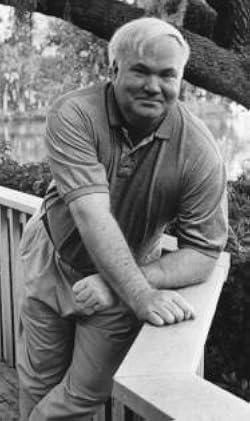
your favorite Conroy books, and though I loved Prince of Tides, my favorite book of his is The Pat Conroy Cookbook: Recipes and Stories of My Life. I have bought and given away many copies of this book over the years. It’s wonderful both for the recipes and the stories. My most requested recipe from my daughter is his creamed corn, which is truly delicious.

This entry is going to be a continuation of my last, about developing a voice for whatever you are writing. I believe that voice is the most important element in writing, and without a good one, one proper to your story, no matter how high concept your book is, it will not excel.

Todays subject is first lines. Book openers. We writers fuss over them for hours and hours because they set the tone for the entire book. Note how the following first lines telegraph the style in which the rest of the novel will be written and how some of them, while not necessarily snappy, set up the plot to come. We’ll give the honor of the first first line in this collection of great first lines, to Pat Conroy. RIP, Pat.

“My wound is geography. It is also my anchorage, my port of call.” Prince of Tides.

And the others, which, mostly, were lifted from writer Tyler Miller’s blog, The Black Cat Moan  

The first four are from Elmore Leonard.

“Chris Mankowski’s last day on the job, two in the afternoon, two hours to go, he got a call to dispose of a bomb.”  — Freaky Deaky

“The night Vincent was shot he saw it coming.”  — Glitz

“One day Karen DiCilia put a few observations together and realized her husband Frank was sleeping with a real estate woman in Boca.”  — Gold Coast

“Every time they got a call from the leper hospital to pick up a body Jack Delaney would feel himself coming down with the flu or something.”  — Bandits

“It was a bright cold day in April and the clocks were striking thirteen.”  — 1984, George Orwell

“By the time he graduated from college, John Smith had forgotten all about the bad fall he took on the ice that January day in 1953.”  — The Dead Zone  Stephen King

“This is the story of a lover’s triangle, I suppose you’d say — Arnie Cunningham, Leigh Cabot, and, of course, Christine. But I want you to understand that Christine was there first. She was Arnie’s first love, and while I wouldn’t presume to say for sure (not from whatever heights of wisdom I’ve attained in my twenty-two years, anyway), I think she was his only true love. So I call what happened a tragedy.” — Christine   King

“The terror, which would not end for another twenty-eight years — if it ever did end — began, so far as I know or can tell, with a boat made from a sheet of newspaper floating down a gutter swollen with rain.”  — IT  King

“She was standing at the center of the subway platform, waiting for the uptown train to come in, when the man stepped up to her and punched her.”  — Kiss, Ed McBain

“Suicide bombers are easy to spot.”  — Gone Tomorrow, Lee Child

“Two hours before the accident occurred, Devlin Jamison drove over the crest of a hill on the pitted two-lane asphalt and saw, far below him, the multiple lanes of the east-west highway, the yellow octagon of the stop sign.”  — Cry Hard, Cry Fast, John D. MacDonald

“Ok, so here I am, Lee Morris, opening doors and windows to gusts of life and early death.” — Decider, Dick Francis

“Ignatius Martin Parish spent the night drunk and doing terrible things.”  — Horns, Joe Hill

“The legless man was wise enough to understand that heroes can be found in the damnedest places.”  — The Greatest Thing Since Sliced Bread, Don Robertson

“I turned the Chrysler onto the Florida Turnpike with Rollo Kramer’s headless body in the trunk, and all the time I’m thinking I should’ve put some plastic down.”  — Gun Monkeys, Victor Gischler

All of you out there who are working on something, go back and look at your first line and ask yourself, Is it good? Is it great?


Friday, February 19, 2016

To Kill a Writing Prompt

Horton Foote

Reaper Report. Thriller Guy can’t let Harper Lee’s death go by without mentioning that To Kill a Mockingbird was a great book and a great movie. But you knew that. TG recommends reading the screenplay for the movie by the masterful Horton Foote.

Thriller Guy’s pal Larry has a good blog entry over at TheNon-Fiction Novelist about writing prompts. Writing prompts are the little exercises that writing teachers hand out to writing students to get their pumps primed, or something. The idea is, I guess, if you get someone writing anything, just writing, they will then leap into their own work with a sense of purpose and vigor. Bullshit. What a waste of writing time. No real writers do this, trust me. Real writers, fiction or nonfiction, write to earn money, either today or tomorrow, and no one ever made money writing someone else’s idea so they could then be in the mood to work on their own idea. TG is aware there are those of you out there who will now send me yet another of those mewling comments about how you write for “ideas” and for the sheer love of writing, etc. etc. And just because there are those who need a further explanation -- this doesn’t mean that when you’re writing your novel you’re writing with the sole goal of making big money, that a publisher is going to immediately pick it up and buy it (those days are long gone). What writing for money means is that you should write it with enough thought and care to produce a work that a publisher or reader will pay for the pleasure of publishing or reading.

So stop writing little exercises where writing teachers, how-to-write books or websites give you a subject and a time limit and tell you it’s going to be fun. Writing isn’t fun. Just get to work.

But TG would like to suggest that reading the right, or wrong thing before writing can certainly influence one’s writing style, for better or worse. So a few minutes of reading can be very valuable.

TG writes in many different styles. When writing time travel novels one “trick” is to hint at the cadences and styles of the period one is writing in. This is what pal Larry calls writing in “old.” As opposed to, say, writing in Spanish. TG’s alter ego, Allen Appel, gets this process moving by reading letters, newspapers and even novels written in the period in which his novel is set. Even five minutes of this is enough to channel your writing brain into, again, the cadences of the period. You don’t want to copy anything other than the sound and the rhythm.

An extreme example of this recently came Appel’s way. Several years ago he decided to challenge himself by learning how to write a novella rather than a full-length novel. The subject would be the most unlikely he could come up with. The winner? Chickens. Could he write a novella or novellas in several different styles about chickens? Stories that would work as stories and not jokes or simple pastiche? The result was The Christmas Chicken, The Flock, and The Maltese Chicken. (All three novellas are available for Kindle here.)

The Christmas Chicken was recorded by the incomparable Brad Wills and is available on audible.com. Recently Brad decided to record The Flock, which meant that Appel was going to have to go back and re-edit that novella to make sure it was in good shape for recording. At the same time, he has been working on his memoir (a shorter version of which can be read at the blogsite http://mylifeinthebigredband). The memoir is written in, well, memoir style, whatever that is. In this case sort of breezy and humorous. The Flock is written in the style of H. P. Lovecraft, and the two are decidedly different. Here are examples, the first paragraph of each piece.

“So in that summer that was not summer, for the cold never left the land, I went to a deep woods known as Wolfsbane, far from cities and towns, to an odd community that lived with whatever strange Gods they worshipped, wanting to be left alone, the lot of them, and the world was happy for it to be so. They called the Hunter, as others have called before, and I came. But it was not wolves who were the bane of these people, though at the time I did not know that, no, not wolves, not Canis Lupus, creatures who ran the cold woods and howled into the deep dark night, though they be fearsome creatures themselves, but others, far more mysterious, and more terrible. It was these that compelled the people of Wolfsbane to summon the Hunter. And if I knew then what I know now, I would not have responded to that summons. But that is Life, is it not? To never know? Yes, Life. And Death.”


My Life in the Big Red Band.  “It was one week into the first summer of band practice when I
first had my ass kicked. I don’t mean that in the general sense of the term, like being beat up in a fight. I mean having another person literally kick me in the ass. Getting beat up in a fight would be a good way to begin a memoir, but this is nothing like that. Pain, loss, abuse are all perfectly good stories to reveal a life shaped by adversity. God knows enough true stories have begun with a belt, a fist, or a wire hanger smacking a child in the face. But this is anything but that. In fact, it’s the opposite of a life forged by adversity, more a life shaped by mostly good fortune. Where’s the drama in that, you might ask? I don’t know, I guess we’ll just have to find out.”

As you can see, the two styles are radically different. Moving from one to the other was going to screw up the cadence of both of them. What to do? In this case, it was to take the time to stop and read a lot of whatever one I was going to be working on, to expunge the style of the other. I was lucky here, in that I had a sample of the exact style I needed to continue in the style I needed. My own style. So that’s TG’s first piece of advice, and it’s a simple one: Screw the stupid prompts, read your own work before you begin writing your own work. This is what you should be doing anyway: when you begin work you start by editing the work you did the day before. Then when you start in on new stuff, you’re already in your own cadence. TG knows some smarty-pants out there is going to write in and say he/she doesn’t need to do this because he/she always writes in his own style, blah blah blah, but TG contends that in most cases, anyone who sits down to write will have already read something that someone else has already written beforehand. Often it’s the newspaper or even emails, either of which will channel your brain into someone else’s style. Expunge it!

But what if you’re at the beginning of a new piece, so you don’t have your own work to read and mimic? TG suggests spending a few minutes every day before you begin writing reading in whatever style you’re writing in, just to get your writing brain in the proper gear. With The Flock, that meant reading a Lovecraft story every day before working. With the memoir Appel read memoirs in “his” style, My Father’s Eyes, by Mary Bonina, Liars Club by Mary Carr, The Life and Times of the Thunderbolt Kid by Bill Bryson were just a few that he enjoyed before starting his writing day. All were extremely helpful in getting him into the proper brain groove.

So stop with the stupid writing prompts. Grow up and write your own ideas. Unless someone is paying you to write theirs. But read before you write. Your own work if you’ve got it, or those of other writers you think are working in a style that is close to what you are trying to do. Above all…

Sit down, shut up, get to work.


Saturday, January 16, 2016

Better Dead Than Alive

Thriller Guy would like to apologize for being so remiss in posting lately. Most of his blogging energy was used up by Allen Appel over at his memoir blog at http://mylifeinthebigredband.com. That blog is about to go on hiatus, so TG will be back pissing and moaning and bitching about books, authors and the Writing Life again right here.

Thriller Guy was reading a thread about, what else? thrillers on Facebook where a lady,
complaining about how so many big time authors seem to have faded recently, said, “I’ve stopped reading Tom Clancy, he’s just been phoning it in for the last few years.” TG thought this was a tad unjust, seeing as the man has been dead since 2013. And in fact, TG thinks the lady is flat out wrong: Tom Clancy’s book are far better written since he stopped writing them. And TG believes this is true in the majority of cases where a beloved, mega-selling author has brought in hired help to actually write his books for him. Generally, these co-authors or ghosts are better writers than the originals ever were, dead or alive. Full disclosure, TG’s alter ego Allen Appel and several of his friends have ghost-written a number of books, though never for anyone as famous, at least as famous in the fiction world, as Clancy.

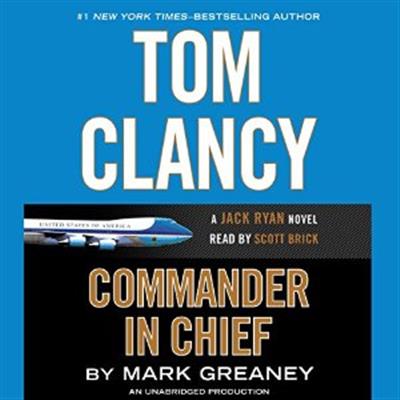
Mark Greaney is the current author of Tom Clancy’s Jack Ryan series and has written, or
co-written, six of Clancy’s novels. Clancy’s first co-author was Larry Bond, who is one of the top military fiction authors in the world today. Other authors who have penned Clancy novels are Grant Blackwood and Peter Telep, both excellent novelists in their own right. These guys are said to make between $40,000 and $70,000 for writing a top author’s books. This is “work for hire,” they generally do not share in royalties.

Greaney has nothing but nice things to say about writing the Clancy series. He started doing it a couple of years before Clancy died, so he had actual contact with the man who he was writing as. TG spoke with Greaney and asked him if he was consciously trying to write in Clancy’s style and he said not really, but that writing in Clancy’s “world” made his work different than when he wrote his own books.

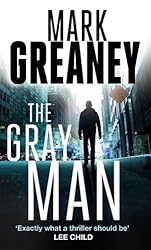
Greaney writes a series known as the Gray Man novels. TG reviewed the most recent book
in the series, number five, Back Blast, and thought it was terrific. Greany can write Clancy better than Clancy could write Clancy, but he really comes into his own when he, well, comes into his own. Greaney’s hero, Court Gentry, The Gray Man, is back in the US trying to find out why the CIA has a standing kill order out on him. To get answers he has to out-think and out-gun the scores of folks from various agencies who are trying to kill him. Gentry is a far more interesting protagonist than Clancy’s Jack Ryan or Jack Ryan’s son, who has taken over the action role in the series. TG recommends readers of these types of thrillers start with Greaney’s latest and if you like it, go back and read the entire series. As far as his Clancy-inspired books go, if you liked them when they were written by Clancy, don’t shy away from them now. You’ve still got many of the old Clancy characters, the plots are huge and Greaney does a great job of hunting down and inserting all the tech and military details that Clancy pretty much trademarked while he was writing the books.


So, to that lady who complained that Tom was phoning them in, give him another chance. He may be dead, but his writing is better than ever.

Monday, December 14, 2015

A Christmas Gift From TG

Thriller Guy in either of his two iterations – TG or Allen Appel – is never above stealing someone else’s blog material to use here, though he always, yes always, declares he is stealing when he does so. Which makes him what? A thief with dubious honor? or simply a writer who is willing to do what it takes to feed the ever-hungry blog entity. But often he runs across blogs and or essays that are simply too good to steal wholesale, or, usually, too long to fit on a normal Thriller Guy template. So TG is going to pass a couple of these along from the actual Internet home where they were originally written so you can go to the source and read them. They’re long, but they’re funny and well worth your time. Besides, what else do you have to do? If you weren’t willing to fritter away your time, you wouldn’t be reading this blog in the first place.

The first is a blog entry at Vulture.com that is essentially about movie scriptwriting, but as TG has tried to make clear over the years, writing Thrillers is essentially another form of writing action movies: the same basic rules apply. Thriller writers are advised to read this very funny essay and follow these rules in their novels. The article is Star Script Doctor Damon Lindelof Explains the New Rules of Blockbuster Screenwriting, by Scott Brown.

The second blog essay is from theawl.com, where Heather Havrilesky talks about the fantastic life of a writer, one who actually works at the craft for money. TG has often written about many of the same experiences as Ms Havrilesky, but she is far funnier. Havrilesky is The Awl’s existential advice columnist. She’s also a regular contributor to The New York Times Magazine, and is the author of the memoir Disaster Preparedness (Riverhead 2011).  

Consider these two essays as TG’s holiday gift to his many followers. And speaking of gifts, what about a Kindle copy of Allen Appel’s The Christmas Chicken for some lucky loved one on your gift giving list? Or how about as an audio book performed by the fabulous Brad Wills. Really, the guy is incredible. If you don’t laugh at his fabulous chicken imitation TG will return your money. (True.) Find the the audio book version here. Start your own Christmas tradition, the yearly holiday reading or listening to The Christmas Chicken.

Or, buy a copy of any of Appel’s novels and preload them on a brand new Kindle for that hard-to-buy-for friend or relative on your list? Trust Thriller Guy, it’s a great gift suggestion.

Really.


Really really really.