Thursday, May 12, 2016

Copyeditors: Why We Love Them

Gather around Little Ones, and let Thriller Guy tell you fantastical stories of days of yore, back when giant publishers ruled the vast book markets and special stores sold brightly colored paper objects stored on shelves and tables, where “readers” would stand happily thumbing through these objects, buying them and going home to spend hours in comfy chairs as time flew by. But how did these objects appear in the stores? Certainly not by magic, though it might have appeared so, no, there were hundreds of intervening steps that these publishing houses went through, painstakingly inching these books through a traditional pipeline that took eighteen months from the time the writer signed the contract until the books ended up on the shelves.

There were many people along the way who participated in the process. Some, like the sales department, were a pain-in-the-ass to deal with; they always had too much influence on the final product, influence that never related to sales, as far as TG could tell. The marketing department was always manned (womanned?) by an endless series of young women, all recent graduates of one of the Seven Sisters Colleges, all named Jennifer. (email: ”Hi, this is Jennifer, I’ll be handling the marketing for your book. We’re all really excited here and know that this is going to be a really fun project! I’ve attached a three hundred page questionnaire and we’d like to have it completed and back in a week. I know that’s pretty quick, but we just can’t wait to get started!”) Jennifer was always gone in six months, replaced by another Jennifer who would have the same in-house life span. Nothing good ever came from these Jennifers.

But many months after the project was turned in, the manuscript would be returned to you, the writer, and it would be marked up by the copy editor. These copy editors -- always young ladies in TG’s experience -- were brilliant. They would take your manuscript, which was shitty, you just didn’t know how shitty, and correct all your misspellings, typos, and ignorance, gently pointing out your stupidity, always in a pleasant manner, never accusing you of incipient moronness, and attaching a list of rules and suggestions at the end for future reference. TG always pictured them as looking like Audrey Hepburn, with or without the cigarette holder, curled up in a comfy armchair working on a pile of pages, your manuscript. TG loved these women. They made your writing sing. And now, alas, they’ve mostly all been let go by publishers, who suggest you hire one freelance and pay for it yourself. Unless you’re Stephen King, of course.

The thing is, this is very doable. There’s a bunch of really great copy editors and editors of all stripe out there, just waiting to take your manuscript under their gentle wing. Many of them used to work for big publishers and have now been “let go” because those same publishers are floundering around trying to figure out their own industry in the brave new world of the Internet. It was a stupid decision – fire everyone that doesn’t directly influence the economic stream of the best sellers they are looking for – but it doesn’t surprise me. When a person, or a business, is in trouble and in danger of dying, lots of stupid decisions are made.

I was reminded of this recently as I needed a good editor to copyedit the memoir I have been working on. I first put it up as a blog, and when the reception of the material was overwhelmingly positive, I decided to expand it into a regular book. I can stand to make some mistakes that aren’t totally egregious when (like this blog) I’m putting something on the Interweb for free, but when I ask folks to pay for my work I expect to give them clean copy. I found my expert, Bev Weiler, close to home, in that she had written me back when I put my last time travel book, TheTest of Time, up on Amazon. Bev is a fan of the series, and noted that while she liked the most recent entry she found there were plenty of mistakes in the copy. She suggested that in her free time she might go through and edit the book for me so the Kindle version and any later paper editions would be clean. I gratefully accepted her offer.

The copy she was referring to, The Test of Time, had been rewritten seven times, edited and copyedited by a number of my friends, and I still did not doubt that there were plenty of mistakes that made it through uncaught. Any writer will tell you that this is so in almost anything written for publication. And the longer the piece is, the more difficult it becomes to ferret the gremlins out. Here’s where you need a professional.

So, vowing that I would not send out another piece with errors, a hired Bev to do her professional magic on the memoir. An author can tell how good an editor is by how terrible they feel when reading the edited manuscript. Bev was brilliant, and I was the lowest piece of writing scum that was ever dragged inside on someone’s bootheel. I’m an idiot, a moron, a writer so pathetically inept I shouldn’t be allowed within ten feet of a keyboard. But Bev worked with the same patient, gentle demeanor of her clan, and fixed my book so I don’t have to be embarrassed about it when it comes out.

So here’s to you, Bev, and all your brothers and sisters toiling away out there, fixing the broken manuscripts, from the unreadable to the just-not-quite-right, with your quiet courage and steely resolve. May you and your tribe live long and prosper.

If anyone else out there wants to put up a product they can be proud of, even though they think that they can do the editing themselves, Bev can make you look really good. Send her an email – bevweiler@gmail.com. And stick a finger in the eye of Big Publishing when your book -- clean, sleek, error free -- sells a million copies.

(P.S., Bev, don’t bother copy editing this blog, it’s too late.)


Saturday, April 9, 2016

Murder, He Wrote

Thriller Guy is off at some undisclosed location doing God knows what. I, in the meantime, have been rattling around in that particular writer hell known as What’s Next? That’s when you’ve finished a major project, in my case a memoir of my early years, and you don’t have any idea of what you’re going to write next. This didn’t use to be a problem for me as I had a fiction series I was writing and after finishing one I would just move onto the next. After six of these books (you can find them on Amazon here) I am reluctant to continue the series, mostly because publishers aren’t interested in buying a new one nor are they interested in taking up the cause of the extensive backlist. So unless there’s a groundswell of buyers, I’m going to stick with Johnson’s famous sentiment about only fools writing if there is no money involved. Or at least the possibility of money.

Many kind folks have asked that I extend my memoir, but many of those who I would be writing about are still alive and, frankly, I don’t really want to piss anyone off, which my writing about them surely would.

Those of you who read this blog know that I have spoken about the What to Write problem before. My usual prescription is to settle down with a bottle of gin and drink until I come up with an answer. That doesn’t seem to be working this time, though I am valiantly soldiering on in this direction.

Recently, by accident, I stumbled upon a Wikipedia site that I believe might well spur a solid plotline. It’s an extensive collection of unsolved murder cases in the United States, and it makes for fascinating reading, falling in the I’ll-read-just-one-more catagory. Once you start, it’s tough to stop. Here are a few edited-for-length, interesting examples.


On May 28, 1911, the body of Belle Walker, an African-American cook, was found 25 yards from her home on Garibaldi Street in Atlanta. Her throat had been cut by an unknown slayer, and the crime was reported in the Atlanta Constitution under the headline "Negro Woman Killed; No Clue to Slayer." On June 15, another black woman, Addie Watts, was found with her throat slashed, followed on June 27 by Lizzie Watkins. The search for the serial killer, called "the Atlanta Ripper" by the press, found six different suspects, but no convictions were ever made, nor was the crime ever solved. By the end of 1911, fifteen women, all black or dark-skinned, all in their early 20s, had been murdered in the same manner. The "Ripper" may have had as many as 21 victims, but there is no conclusive proof that the murders were carried out by one person.


6 to seven dead, 6-7 injured from 1912 to 1919
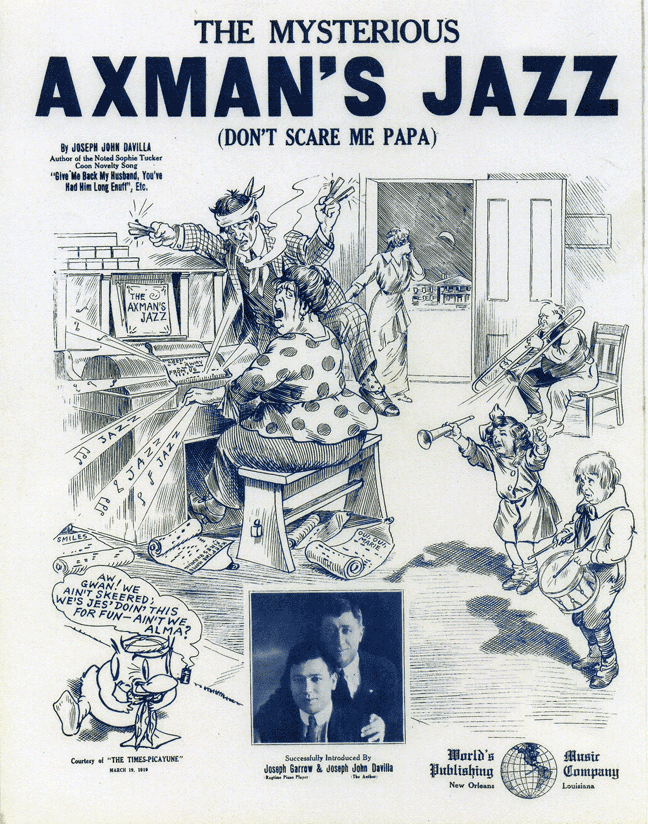
The Axeman was not caught or identified, and his crime spree stopped as mysteriously as it
had started. The murderer's identity remains unknown to this day, although various possible identifications of varying plausibility have been proposed. On March 13, 1919, a letter purporting to be from the Axeman was published in newspapers saying that he would kill again at 15 minutes past midnight on the night of March 19, but would spare the occupants of any place where a jazz band was playing. That night all of New Orleans' dance halls were filled to capacity, and professional and amateur bands played jazz at parties at hundreds of houses around town. There were no murders that night.


He was born Gaspar Griswold Bacon, Jr. Born to a life of privilege and wealth, David Bacon graduated from Harvard. He summered with his family at Woods Hole on Cape Cod, where he became involved during the early 1930s with the "University Players." There he met then unknown performers James Stewart and Henry Fonda, with whom he later shared accommodations while he struggled to establish himself. He moved to Los Angeles where he met and married an Austrian singer, Greta Keller. In her later years, Keller disclosed that Bacon was homosexual, and that she was lesbian, and that their lavender marriage partly served as what she referred to as a "beard", allowing both of them to maintain a respectable facade in Hollywood, where they were both attempting to establish film careers.
In 1942, Howard Hughes met Bacon, and signed him to an exclusive contract, with the intention of casting him in The Outlaw (1943) as Billy the Kid. Though Hughes later decided not to use Bacon in The Outlaw, he kept Bacon to the terms of his contract, casting him in several smaller roles. Hughes did lend out Bacon for a role in the Republic serial The Masked Marvel (1943). The serial was produced with a low budget, and marked a low point in Bacon's career, with Keller recalling that he was completely humiliated. Today it remains his best-remembered work.
On September 13th 1943, Bacon was seen driving a car erratically in Santa Monica before running off the road and into the curb. Several witnesses saw him climb out of the car and stagger briefly before collapsing. As they approached he asked them to help him, but he died before he could say anything more. A small knife wound was found in his back – the blade had punctured his lung and caused his death. Keller, in an advanced stage of pregnancy, collapsed when she heard of her husband's death, and later her baby was stillborn.
When he died, Bacon was wearing only a swimsuit, and a wallet and camera were found in his car. The film from the camera was developed and found to contain only one image, that of Bacon, nude and smiling on a beach. Police theorized that the photograph had been taken shortly before his death by his killer. The case attracted publicity for a time and remains unsolved.

These are just three examples chosen at random from the extensive list. As a historical novelist, these older examples appeal to me more than the current ones, though they are interesting as well. I could imagine writing about 1911 Atlanta, or the Axeman of New Orleans. Imagine the fun you could have writing that scene where all of New Orleans played jazz one night to keep the Axeman from killing again. Fabulous. And I am particularly drawn to the failed actor, circa Hollywood, 1943, stumbling out of his car with a small knife wound in his back as the air leaked out of his lungs while he begged for help. What a story.

Hmmmm. Maybe I’m on to something here. Let me get my gin bottle. Time to do some heavy thinking.


Monday, March 28, 2016

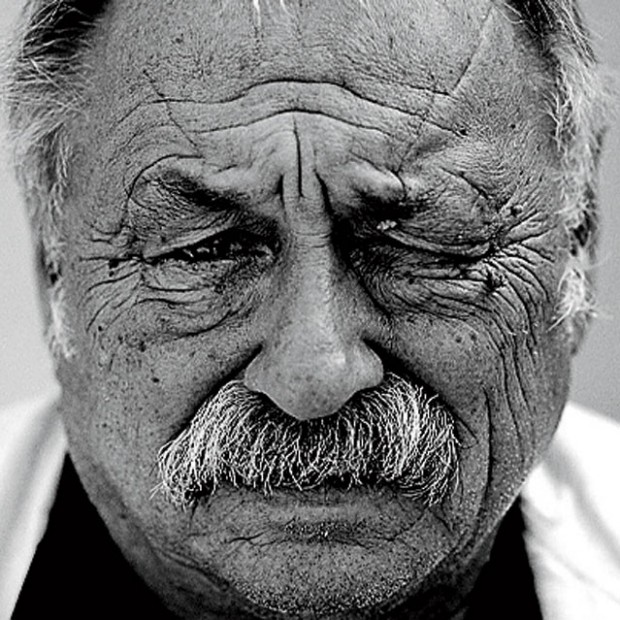
Jim Harrison


This week’s Reaper Report features, sadly, Jim Harrison, who dropped over dead at his desk a few days ago while working on a poem. The world is a less interesting place without him writing about it. I have to say, while I devoured his non-fiction, especially the stuff about food, and I was a fan of his poetry, I admired rather than loved his fiction. I knew it was good, certainly literature of a high order, and his descriptions of the natural world were lyrical and often beautiful, but I found his stories slow and his characters, even though they were often different, or not so different, versions of himself, not very compelling. I understand this is a lack of something in me, rather than a lack of something in his work.

I recently read a long interview with him, I can’t remember where, at the end of which he learns his wife of many years was dying, and he said that he didn’t know if he wanted, or could bear, to go on living without her. And he didn’t, so I guess he had made that decision.

His first famous book, Legends of the Fall, came out when I was under the influence of writers like Harrison who were putting out big, powerful books, Thomas McGuane, Robert Stone, strong books that impressed young men. I read Legends and understood why it was important, but I fell by the wayside when others, many others, followed. But now I’m an old man, not quite Harrison’s age but getting up there, so maybe it’s time to go back and read him again. Maybe I’m smarter now, wiser. Or maybe not. We'll see.

Here are some random quotes from some of the books, and random thoughts from Harrison. R.I.P.

“If you added it up, without her there was nothing--but with her even the simplest of gestures of walking a bird dog in the desert, or selecting the ingredients for a meal for two rather than one took on an ineffable charm.” Revenge

“His own life suddenly seemed repellently formal. Whom did he know or what did he know and whom did he love? Sitting on the stump under the burden of his father's death and even the mortality inherent in the dying, wildly colored canopy of leaves, he somehow understood that life was only what one did every day.... Nothing was like anything else, including himself, and everything was changing all of the time. He knew he couldn't perceive the change because he was changing too, along with everything else." The Man Who Gave Up His Name

“After dinner the Texan invited Cochran to accompany him to a whorehouse but he declined saying he'd feed, walk and water the horse.
'Strikes me you had a big day and some poontang might ease your mind.'
'Nope. Killed a man I hated today and I don't want to mix my pleasures. I want to lay in bed and think how good it felt.'
The Texan nodded and lit a cigar. He was no man's fool.”
Legends of the Fall

“Perhaps swimming was dancing in the water, he thought. To swim under lily pads seeing their green slender stalks wavering as you passed, to swim under upraised logs past schools of sunfish and bluegills, to swim through reed beds past wriggling water snakes and miniature turtles, to swim in small lakes, big lakes, Lake Michigan, to swim in small farm ponds, creeks, rivers, giant rivers where one was swept along easefully by the current, to swim naked alone at night when you were nineteen and so alone you felt like you were choking every waking moment, having left home for reasons more hormonal than rational; reasons having to do with the abstraction of the future and one's questionable place in the world of the future, an absurdity not the less harsh for being so widespread.”  Legends of the Fall

“Death steals everything except our stories.”


Saturday, March 5, 2016

First Things First

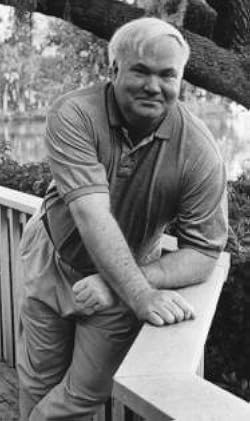
This week’s Reaper Report notes, alas, the passing of the great Pat Conroy. Most of you will have
your favorite Conroy books, and though I loved Prince of Tides, my favorite book of his is The Pat Conroy Cookbook: Recipes and Stories of My Life. I have bought and given away many copies of this book over the years. It’s wonderful both for the recipes and the stories. My most requested recipe from my daughter is his creamed corn, which is truly delicious.

This entry is going to be a continuation of my last, about developing a voice for whatever you are writing. I believe that voice is the most important element in writing, and without a good one, one proper to your story, no matter how high concept your book is, it will not excel.

Todays subject is first lines. Book openers. We writers fuss over them for hours and hours because they set the tone for the entire book. Note how the following first lines telegraph the style in which the rest of the novel will be written and how some of them, while not necessarily snappy, set up the plot to come. We’ll give the honor of the first first line in this collection of great first lines, to Pat Conroy. RIP, Pat.

“My wound is geography. It is also my anchorage, my port of call.” Prince of Tides.

And the others, which, mostly, were lifted from writer Tyler Miller’s blog, The Black Cat Moan  

The first four are from Elmore Leonard.

“Chris Mankowski’s last day on the job, two in the afternoon, two hours to go, he got a call to dispose of a bomb.”  — Freaky Deaky

“The night Vincent was shot he saw it coming.”  — Glitz

“One day Karen DiCilia put a few observations together and realized her husband Frank was sleeping with a real estate woman in Boca.”  — Gold Coast

“Every time they got a call from the leper hospital to pick up a body Jack Delaney would feel himself coming down with the flu or something.”  — Bandits

“It was a bright cold day in April and the clocks were striking thirteen.”  — 1984, George Orwell

“By the time he graduated from college, John Smith had forgotten all about the bad fall he took on the ice that January day in 1953.”  — The Dead Zone  Stephen King

“This is the story of a lover’s triangle, I suppose you’d say — Arnie Cunningham, Leigh Cabot, and, of course, Christine. But I want you to understand that Christine was there first. She was Arnie’s first love, and while I wouldn’t presume to say for sure (not from whatever heights of wisdom I’ve attained in my twenty-two years, anyway), I think she was his only true love. So I call what happened a tragedy.” — Christine   King

“The terror, which would not end for another twenty-eight years — if it ever did end — began, so far as I know or can tell, with a boat made from a sheet of newspaper floating down a gutter swollen with rain.”  — IT  King

“She was standing at the center of the subway platform, waiting for the uptown train to come in, when the man stepped up to her and punched her.”  — Kiss, Ed McBain

“Suicide bombers are easy to spot.”  — Gone Tomorrow, Lee Child

“Two hours before the accident occurred, Devlin Jamison drove over the crest of a hill on the pitted two-lane asphalt and saw, far below him, the multiple lanes of the east-west highway, the yellow octagon of the stop sign.”  — Cry Hard, Cry Fast, John D. MacDonald

“Ok, so here I am, Lee Morris, opening doors and windows to gusts of life and early death.” — Decider, Dick Francis

“Ignatius Martin Parish spent the night drunk and doing terrible things.”  — Horns, Joe Hill

“The legless man was wise enough to understand that heroes can be found in the damnedest places.”  — The Greatest Thing Since Sliced Bread, Don Robertson

“I turned the Chrysler onto the Florida Turnpike with Rollo Kramer’s headless body in the trunk, and all the time I’m thinking I should’ve put some plastic down.”  — Gun Monkeys, Victor Gischler

All of you out there who are working on something, go back and look at your first line and ask yourself, Is it good? Is it great?