Showing posts with label the writing life. Show all posts

Thursday, June 29, 2017

So long, Thriller Guy


It has become obvious that the always shadowy Thriller Guy has not made the transition from scarred urban warrior crouched in his basement lair to the kinder hills and small towns of North Carolina.

I’ve thought about how to bring him to a natural, or unnatural end. Maybe going down in a brisk pre-dawn firefight on some unnamed snow-capped ridge under siege from a legion of turbaned AK-wielding hajjis. He’d like that. Or perhaps something more ironic, more absurd. I’ve always been amused by the scene in the movie Who’s Afraid of Virginia Woolf when George sits Martha down after a long night of drinking and tells her, in Richard Burton’s solemn, sonorous voice, that their son Jim was killed that afternoon on a country road… “when he swerved to avoid hitting a porcupine and crashed into a tree.” How ignominious. How completely un-Thriller Guy.

At any rate, it’s clear that he’s run out of writing advice to sling around.

I began writing this blog almost exactly eight years ago.  There have been 234, now 235, posts, and the site averages a couple of thousand visitors a month. These are nowhere near viral statistics, but in terms of years Thriller Guy has out-written probably 99.5% of all the bloggers who have declared their intentions and started in posting on a dedicated site. Blogging is tough. My old, lamented, lost friend Bhob Stewart used to say blogging was “public writing,” which is as good a definition as I’ve ever come across. When you’re writing, it’s as if your readers are in the same room with you, crowding around, looking over your shoulder, nagging, “No, that’s bullshit, you’re an idiot,” as you struggle to ignore their taunts. Then, you may ask, if it’s so damned difficult why are there so many blogs? Because it’s also amazingly easy. All you have to do is sign onto BlogSpot or one of the other sites and just start blathering. My rule of thumb, or rather Thriller Guy’s rule of thumb, is don’t even call yourself a professional blogger before you have at least 100 entries etched into the unforgiving surface of the Internet. Then you can have a conversation with TG about what it’s like to be a blogger, to come up with something new every time you sit down at the keyboard and launch into another tirade. You think it’s easy generating that much ire week after week, year after year?

I’m going to drop a bomb here: Thriller Guy is not real; he is a character. I’m sorry if some of you have been misled over the years, thinking that TG is a tough, kick-ass grizzled ex-warrior who learned to craft novels and was willing to share his writing experiences. I hope you haven’t been too disappointed that he never has had time to get together and have a beer and toss around war stories with you as you’ve requested. I’m going to give it to you straight: Thriller Guy is actually a portly old guy who sits in his basement tossing out advice on how to write fiction, particularly thrillers. TG has never been in the military. He has never heard a shot fired in anger. He has little experience with guns. Thriller Guy has never jumped out of an airplane or crept around behind enemy lines. TG has never even seen a real pair of Night Vision Goggles.

TG is actually something of an asshole. As a writing coach and mentor he was designed to be irascible, opinionated, taunting, and sometimes cruel. I, his creator, was sick of all the well-meaning writing mentors who pat wanna-be authors on the head and bestowed their gentle nurturing advice as if writing was somehow special work, done by special people, for whom a harsh word or dearth of praise would throw these aspiring “artists” into fits of melancholy, from which stygian depths they would never arise to craft their masterpieces.

No, it was always TG’s goal to give anyone who thought they wanted to be a writer a swift kick in the ass in the hopes that reality would kill off the weaker ones and dissuade those who didn’t have the stones to continue in the face of unrelenting insults and ridicule. TG did not want to gently bestow the lessons of his vast experience upon those supplicants who knelt at his feet with their sad pleading eyes, TG wanted to take his experience and beat them over the head with it. To chase them away, back to real lives.

Of course it didn’t work. Writers seem to have a predilection for torture, probably because real writing is one of the worst tortures that deluded humans can wish upon themselves. There is a romanticism about writing that is completely misplaced, but the more a professional writer tries to drive that point into the thick, disbelieving skulls of the neophyte the more ridicule these greenhorns beg for. As if rejection is somehow honorable. It’s not. It’s painful. And it’s unfair. And there’s not a goddamned thing you can do about it. TG could teach you all the tricks of the genre trade and you’re still not going to get your fair slice of the pie. The system is rigged, as that asshole Donald Trump would say. As always it’s rigged in favor of the guys and gals who are already making a ton of money, and it’s rigged against any novice no matter how talented he or she may be. I know authors who have a dozen published books under their belt and they still can’t find an agent, much less a publisher. Self-publishing? Go ahead and hang onto your inspiring, hopeful stories about guys like Hugh Howey making it big by publishing his own stuff with Amazon. Unfortunately, you aren’t Hugh Howey and your self-published book will probably sell around five copies. I know this from my own experience. All of my books are available in some form on Amazon. You can buy them here. But you probably won’t. Some of them sell reasonably well, some of them don’t, and I don’t have a clue why there’s a difference.

Don’t blame Thriller Guy for these sad truths. He tried to stop you way back eight years ago when you came to him, begging in your plaintive voice, “How do you do it, TG? How do you write a best-selling thriller novel?” TG gave you all that he had learned over the years spent in the filthy, cruel trenches of publishing. Parsed it out over 234 entries. All the tips and tricks of the trade. And in the end it always came down to TG’s mantra: Sit down; Shut up; Get to work.

That’s the secret. If you do that, you’ll write your book. It’s that simple. And that difficult. What so many of you are asking for is not how to write a book, but how to write a successful book. How to make money writing a book, how to become famous by writing a book, how to amass legions of fawning admirers by writing a book. Alas, Thriller guy can’t tell you that. I can’t tell you that. No one is able to do that. And beware those who tell you they have the secret and they would be glad to sell it to you.

Annie Dillard writes in her book, The Writing Life, that after Michelangelo died, someone found in his studio a piece of paper on which he had written a note to his apprentice, in the handwriting of his old age: “Draw, Antonio, draw, and do not waste time.”

Like the man said: Sit down; Shut up; Get to work.

Here’s one last secret. TG wouldn’t want me to tell this one, he’d be embarrassed to admit it, but over the last eight years he and I have met, via the Internet, because of this blog, quite a few excellent writers.  Writers who, if they persevere against all the terrible odds that TG has thrown at them, are going to write terrific books. Who are in the process of writing terrific books. So we’ll let TG go, at least for now, to wander off into some other reality. No more yelling. This is me, Allen, whispering into your ear…

Hush, child. No more questions. Sit down. Write. You can do this. Trust me. Write.

Onward. Always Onward.


                                                                                    Allen Appel
                                                                                    Written in his studio aerie,
                                                                                    Overlooking his back yard,
                                                                                    On a lovely day,
                                                                                    June 28, 2017


Tuesday, November 29, 2016

Sorry.


Yes, I know, it’s been awhile. I apologize to those anxiously waiting me to tell them the secret of how to work a decent writing schedule into their day without upsetting regular life. Here’s the awful truth: it’s not going to happen.

Back in my youth, what the kid’s call my hippie days, the late fifties and early sixties, women were throwing off conservative conventions and trying on lifestyles that allowed them to work full time, raise children, have partners who were equal helpers and lovers, lead healthy lifestyles, look good and be cool. In other words, women were determined to Have It All. There were scores of self-help books advising women how to accomplish this goal. A quick look at Amazon shows me that there are still scores of books claiming the same thing: Yes, Women, You CAN have it all. There are no books telling writers that they can have it all as well.

The thing is, you can’t actually have it all. Or at least you can’t have it all and do everything effectively. Yeah, I know, I’m going to get pushback on this, so go ahead, send me your comments, take me to task.

If you’re going to write, especially if you’re going to write novels and live a reasonably sane life at the same time, some elements are going to be short-changed. Either Life or The Novel. The question now is: Can I Live a Life Where One or Some of the Things I’m Doing Are Not Going to be Done All That Well Some of the Time, or Even All of the Time While Devoting Time and Effort to My Writing? It makes for a very unwieldy, not very hopeful book title, one that’s not going to sell many copies.

The first thing that my friends and those I talk to about this problem say is they will put their novel off until they retire. This is a sound solution, particularly if you are old like Thriller Guy, but what if you die first? Or what if you keep putting off retirement because you want or need to earn more money. And worst of all, what if you wait, sometimes for many years, and when you finally do have the time to write you find that you just can’t do it, for any number of reasons: you no longer have the stamina, (trust me, it’s hard physical work and you’re not as young as you used to be,) you don’t have the ability to force yourself into the chair in front of the keyboard, you find it too painful, or it’s just too much damn work. And not fun at all. (Trust me again, if you are approaching it in a workmanlike manner, it’s not going to be much fun. See the archives; Thriller Guy has written on this aspect of The Writing Life many times.) So I don’t recommend putting it off.

For one thing, you’re wasting valuable time. It is said that scientists do all of their useful work when they’re young, and I could make an argument for novel writers as well. Yes, I can think of many exceptions, but common sense and simple numbers bear this out. If you decide to keep a notebook of good novel ideas over the course of a year you’re going to have a hell of a lot more good ideas if you actually think about them and write them down than if you put it off until you retire. Duh.

If you try to write every day, or once a week, or on vacation, or on the way to work on the train, or while on airplanes, you may not be able to scrape together enough time to write a novel in a year, but you’re sure as hell going to get more done stealing time than if you didn’t try at all.

And if you don’t want to steal the time, ask those who are involved with you in life to let you borrow some, or to even give you some, even though it might make things harder on them. You will be surprised how many partners and spouses are willing to give those they love a chance to do something they feel so strongly about.

So ask for help. Negotiate. Try to manage at least a partial plan.  Stay up later. Get out of bed earlier. Do less around the house. Do less with your family (as long as everyone understands.) Just don’t be a pig. Don’t be an asshole. And you don’t need to feel guilty. Or go ahead and feel guilty, it will make you work harder.

You can’t have it all, but you may be able to have enough of it to make your life feel all right. Not great, maybe, but good. It might take you longer, you will have to make sacrifices, but you can add pages to the pile, ideas to the notebook. At the very least, you’ll have more than if you did nothing. More than if you wait. Is that enough?

Probably not. But it’s better than quitting, giving up, or never starting.

Ask nicely.

Get to work.


Saturday, April 9, 2016

Murder, He Wrote

Thriller Guy is off at some undisclosed location doing God knows what. I, in the meantime, have been rattling around in that particular writer hell known as What’s Next? That’s when you’ve finished a major project, in my case a memoir of my early years, and you don’t have any idea of what you’re going to write next. This didn’t use to be a problem for me as I had a fiction series I was writing and after finishing one I would just move onto the next. After six of these books (you can find them on Amazon here) I am reluctant to continue the series, mostly because publishers aren’t interested in buying a new one nor are they interested in taking up the cause of the extensive backlist. So unless there’s a groundswell of buyers, I’m going to stick with Johnson’s famous sentiment about only fools writing if there is no money involved. Or at least the possibility of money.

Many kind folks have asked that I extend my memoir, but many of those who I would be writing about are still alive and, frankly, I don’t really want to piss anyone off, which my writing about them surely would.

Those of you who read this blog know that I have spoken about the What to Write problem before. My usual prescription is to settle down with a bottle of gin and drink until I come up with an answer. That doesn’t seem to be working this time, though I am valiantly soldiering on in this direction.

Recently, by accident, I stumbled upon a Wikipedia site that I believe might well spur a solid plotline. It’s an extensive collection of unsolved murder cases in the United States, and it makes for fascinating reading, falling in the I’ll-read-just-one-more catagory. Once you start, it’s tough to stop. Here are a few edited-for-length, interesting examples.


On May 28, 1911, the body of Belle Walker, an African-American cook, was found 25 yards from her home on Garibaldi Street in Atlanta. Her throat had been cut by an unknown slayer, and the crime was reported in the Atlanta Constitution under the headline "Negro Woman Killed; No Clue to Slayer." On June 15, another black woman, Addie Watts, was found with her throat slashed, followed on June 27 by Lizzie Watkins. The search for the serial killer, called "the Atlanta Ripper" by the press, found six different suspects, but no convictions were ever made, nor was the crime ever solved. By the end of 1911, fifteen women, all black or dark-skinned, all in their early 20s, had been murdered in the same manner. The "Ripper" may have had as many as 21 victims, but there is no conclusive proof that the murders were carried out by one person.


6 to seven dead, 6-7 injured from 1912 to 1919
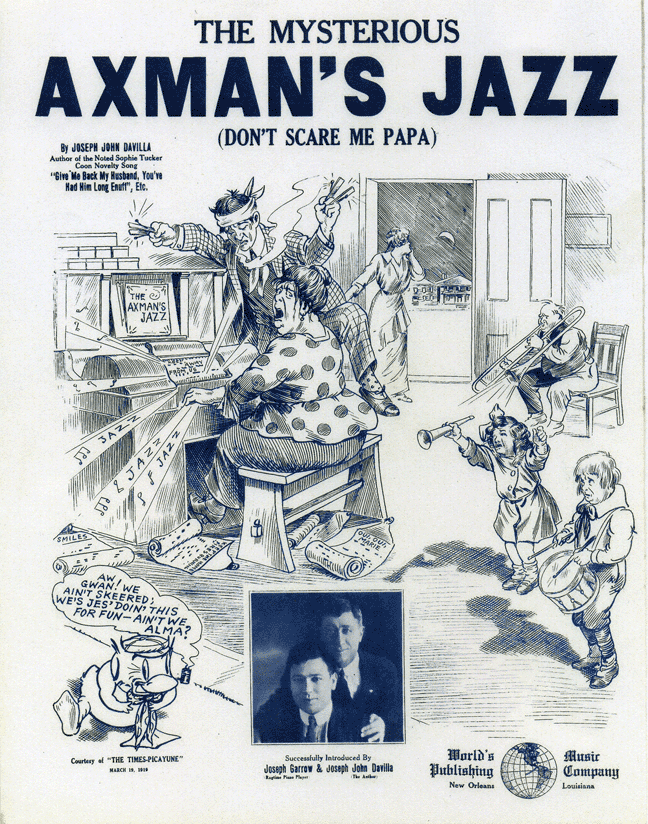
The Axeman was not caught or identified, and his crime spree stopped as mysteriously as it
had started. The murderer's identity remains unknown to this day, although various possible identifications of varying plausibility have been proposed. On March 13, 1919, a letter purporting to be from the Axeman was published in newspapers saying that he would kill again at 15 minutes past midnight on the night of March 19, but would spare the occupants of any place where a jazz band was playing. That night all of New Orleans' dance halls were filled to capacity, and professional and amateur bands played jazz at parties at hundreds of houses around town. There were no murders that night.


He was born Gaspar Griswold Bacon, Jr. Born to a life of privilege and wealth, David Bacon graduated from Harvard. He summered with his family at Woods Hole on Cape Cod, where he became involved during the early 1930s with the "University Players." There he met then unknown performers James Stewart and Henry Fonda, with whom he later shared accommodations while he struggled to establish himself. He moved to Los Angeles where he met and married an Austrian singer, Greta Keller. In her later years, Keller disclosed that Bacon was homosexual, and that she was lesbian, and that their lavender marriage partly served as what she referred to as a "beard", allowing both of them to maintain a respectable facade in Hollywood, where they were both attempting to establish film careers.
In 1942, Howard Hughes met Bacon, and signed him to an exclusive contract, with the intention of casting him in The Outlaw (1943) as Billy the Kid. Though Hughes later decided not to use Bacon in The Outlaw, he kept Bacon to the terms of his contract, casting him in several smaller roles. Hughes did lend out Bacon for a role in the Republic serial The Masked Marvel (1943). The serial was produced with a low budget, and marked a low point in Bacon's career, with Keller recalling that he was completely humiliated. Today it remains his best-remembered work.
On September 13th 1943, Bacon was seen driving a car erratically in Santa Monica before running off the road and into the curb. Several witnesses saw him climb out of the car and stagger briefly before collapsing. As they approached he asked them to help him, but he died before he could say anything more. A small knife wound was found in his back – the blade had punctured his lung and caused his death. Keller, in an advanced stage of pregnancy, collapsed when she heard of her husband's death, and later her baby was stillborn.
When he died, Bacon was wearing only a swimsuit, and a wallet and camera were found in his car. The film from the camera was developed and found to contain only one image, that of Bacon, nude and smiling on a beach. Police theorized that the photograph had been taken shortly before his death by his killer. The case attracted publicity for a time and remains unsolved.

These are just three examples chosen at random from the extensive list. As a historical novelist, these older examples appeal to me more than the current ones, though they are interesting as well. I could imagine writing about 1911 Atlanta, or the Axeman of New Orleans. Imagine the fun you could have writing that scene where all of New Orleans played jazz one night to keep the Axeman from killing again. Fabulous. And I am particularly drawn to the failed actor, circa Hollywood, 1943, stumbling out of his car with a small knife wound in his back as the air leaked out of his lungs while he begged for help. What a story.

Hmmmm. Maybe I’m on to something here. Let me get my gin bottle. Time to do some heavy thinking.


Monday, March 28, 2016

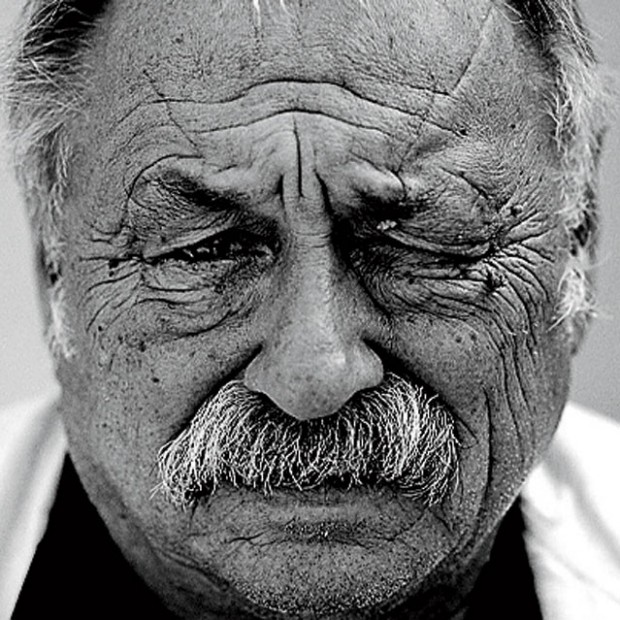
Jim Harrison


This week’s Reaper Report features, sadly, Jim Harrison, who dropped over dead at his desk a few days ago while working on a poem. The world is a less interesting place without him writing about it. I have to say, while I devoured his non-fiction, especially the stuff about food, and I was a fan of his poetry, I admired rather than loved his fiction. I knew it was good, certainly literature of a high order, and his descriptions of the natural world were lyrical and often beautiful, but I found his stories slow and his characters, even though they were often different, or not so different, versions of himself, not very compelling. I understand this is a lack of something in me, rather than a lack of something in his work.

I recently read a long interview with him, I can’t remember where, at the end of which he learns his wife of many years was dying, and he said that he didn’t know if he wanted, or could bear, to go on living without her. And he didn’t, so I guess he had made that decision.

His first famous book, Legends of the Fall, came out when I was under the influence of writers like Harrison who were putting out big, powerful books, Thomas McGuane, Robert Stone, strong books that impressed young men. I read Legends and understood why it was important, but I fell by the wayside when others, many others, followed. But now I’m an old man, not quite Harrison’s age but getting up there, so maybe it’s time to go back and read him again. Maybe I’m smarter now, wiser. Or maybe not. We'll see.

Here are some random quotes from some of the books, and random thoughts from Harrison. R.I.P.

“If you added it up, without her there was nothing--but with her even the simplest of gestures of walking a bird dog in the desert, or selecting the ingredients for a meal for two rather than one took on an ineffable charm.” Revenge

“His own life suddenly seemed repellently formal. Whom did he know or what did he know and whom did he love? Sitting on the stump under the burden of his father's death and even the mortality inherent in the dying, wildly colored canopy of leaves, he somehow understood that life was only what one did every day.... Nothing was like anything else, including himself, and everything was changing all of the time. He knew he couldn't perceive the change because he was changing too, along with everything else." The Man Who Gave Up His Name

“After dinner the Texan invited Cochran to accompany him to a whorehouse but he declined saying he'd feed, walk and water the horse.
'Strikes me you had a big day and some poontang might ease your mind.'
'Nope. Killed a man I hated today and I don't want to mix my pleasures. I want to lay in bed and think how good it felt.'
The Texan nodded and lit a cigar. He was no man's fool.”
Legends of the Fall

“Perhaps swimming was dancing in the water, he thought. To swim under lily pads seeing their green slender stalks wavering as you passed, to swim under upraised logs past schools of sunfish and bluegills, to swim through reed beds past wriggling water snakes and miniature turtles, to swim in small lakes, big lakes, Lake Michigan, to swim in small farm ponds, creeks, rivers, giant rivers where one was swept along easefully by the current, to swim naked alone at night when you were nineteen and so alone you felt like you were choking every waking moment, having left home for reasons more hormonal than rational; reasons having to do with the abstraction of the future and one's questionable place in the world of the future, an absurdity not the less harsh for being so widespread.”  Legends of the Fall

“Death steals everything except our stories.”