Sunday, February 23, 2014

Strong Female Characters?


There have been plenty of words written about writers writing characters of the opposite sex. About how difficult it is and how poorly done the characters can often be. Usually this means men writing women characters, rather than the other way around. Thriller Guy understands that in the thriller genre, which is authored predominantly by male writers, female characters are often not drawn with the depth of the lead characters. (And TG is being generous in implying that the male leads have much depth themselves.) Even the happy-go-lucky male sidekick has more work put into his characterization than the romantic interest, female team members or superior officers. The truth is, a lot of writing deficiencies get conveniently overlooked when bullets are flying and derring-do is being done.

(In the spirit of TG’s continuing effort to bring book-learning to his readers, allow him to offer a small explanation of the words derring-do in the para above. TG looked it up because he was suddenly afraid that it might be spelled the more logical way, daring-do rather than the way he thought it was spelled. But no… From Grammarist.com: “Derring-do is the standard spelling of the noun meaning daring deeds or heroic daring (used especially in reference to swashbuckling heroes). The phrase originated in a late 14th-century Geoffrey Chaucer poem, and it has taken many forms over the years—including durring don (in Chaucer, literally meaning daring to do), dorryng do, derring doe, and derrynge do. And given the term’s meaning and history, it is often understandably spelled daring-do. But as far as most English reference books are concerned, derring-do has been the correct spelling since Sir Walter Scott used it in Ivanhoe in 1819.)”

Back to our regularly scheduled entry…

Women characters. TG has said, many times, that the “romance” elements attempted by most thriller writers end up being not very romantic and mostly embarrassing. The savvier writers eschew romance completely. TG’s pronouncement is that romance almost never adds anything, and almost always detracts. Part of the problem is most thriller writers don’t understand how to write a romantic scene – they almost always go way overboard – and part of the problem is that their women characters are not very well drawn in the first place. Does TG have an answer for this problem? He suggests putting as much original thought into the female characters, and other secondary characters, as one is going to do with the main character. Write out small, or even large, detailed bios of all characters, not necessarily to put into the manuscript, but to give a solid background when writing about that particular character. (TG is aware how boring this sounds.) Just try harder. Work on it. It’s always fun to write when guns are drawn and shots fired, but sometimes characters have to sit down to dinner or talk while riding in a car. Scenes like this can add texture to a novel, something that many thrillers lack. But we haven’t even arrived at the real subject of this entry: strong female characters.

TG was surprised some weeks ago when following a link to arrive at an essay written in NewStatesman by Sophia McDougall titled I Hate Strong Female Characters. TG’s immediate response was, I thought we were supposed to write strong female characters. But on reading the article, TG has to admit that Ms McDougall has a valid point, and even though she was mostly talking about movies, TG feels the same thinking can be applied to novels and thriller writing in particular. You can go here to read the original article, (as of this moment this link is no longer working, perhaps they'll get it back up) or TG will put it in a nutshell for you.

Her thesis is this: Thriller writers (and moviemakers) are beginning to understand that they need to make female characters more interesting than they have been in the past. So what do they do? The usual response is to make them strong. Tough. Able to fight, shoot and kill as well as any male member of the team. McDougall says this is a mistake, an oversimplification. She uses Sherlock Homes’ characteristics to make her point. “He’s a brilliant, solitary, abrasive, Bohemian, whimsical, brave, sad, manipulative, neurotic, vain, untidy, fastidious, artistic, courteous, rude, polymath genius.” In other words, a fascinating character with many fascinating facets. And the usual female thriller heroine? She’s strong, and that’s about it. Maybe a few clichéd characteristics are thrown in – an abusive ex-husband, a failed marriage – but nothing of any serious interest or depth. TG admits there are few heroes or villains of any gender in the thriller field who are as complex as Sherlock, but it might be good for writers to keep the great Holmes in mind when creating their own characters. Hannibal Lechter comes to mind for complexity, but what does Clarice Starling offer other than a stubborn tenaciousness?

Think of movies in general; whenever the point must be quickly made that a woman is going to be no pushover, she cold-cocks some leering Neanderthal and the audience immediately gets the point and pigeonholes her: she’s strong! (Then they cheer.) But, as McDougall points out, at the end she almost always has to be rescued by the hero anyway.

So what’s the takeaway? Like TG said earlier, try harder. Make the same effort with all your characters. Look for nuances in your hero, the villain, the hero’s love interest and all the sidekicks of varying types. Some of you may be asking the question, “So, TG, have you read anything interesting lately where a male author has made the effort with a female character?” TG is glad you asked that question, having reviewed Red Sparrow by Jason Matthews last year and given the book a starred review. Other critics were quick to rush in and pile onto
TG’s coattails. Here’s a bit from the NYT’s review:

 Jason Matthews is a 33-year veteran of the C.I.A. who, according to the press release in front of me, “served in multiple overseas locations and engaged in clandestine collection of national-security intelligence.” Lord knows how he got the manuscript of “Red Sparrow” past the redacting committee at Langley, but he has turned his considerable knowledge of espionage into a startling debut.
The novel pits an ambitious, hotheaded rookie spook, Nathaniel Nash, against a gorgeous Russian intelligence officer named Dominika Egorova. The plot, which swings convincingly between Moscow, Helsinki, Athens and Washington, begins with echoes of Fleming’s “From Russia With Love” — an attractive Soviet “sparrow” is used to compromise a randy Western spy — and ends with an extended homage to the denouement of le Carré’s “Smiley’s People.”

As you can see, the Times loved it. TG interviewed Matthews and found him a mild, self-effacing fellow who is genuinely interested in writing thrillers that are not just action oriented but built on interesting many-faceted characters. Unlike most of the “insiders” who write thrillers after stints in the CIA and other government agencies, Matthews has read in the field and understands the basics and the ground rules. And he is working on a follow up to Red Sparrow.

So here’s the thing. TG finds many thriller writers woefully unable to create interesting complicated characters. For nuance they give their heroes a dead wife to weep about, or maybe a dead kid. They make them drunks, or washed up. And the women characters? They make them strong, when they bother to give them anything besides beauty and large breasts. Maybe they give them self-defense skills. And that’s about it. Until thriller writers learn or work hard enough to create great characters, their genre (our genre) is always going to rest on the bottom of the pantheon, somewhere slightly above romance novels but beneath pretty much all the other genres as far as literary quality is concerned.

Yes, TG understands, thriller readers don’t care about literary quality, it’s all about the guns. But maybe it’s time, my brothers, to start aiming higher.

TG has decided to write his next blogs showing the Ten Shopworn, Clichéd, Overused Characteristics of Thriller Characters: Heroes, Villains Sidekicks, Romantic Interests. Then he will follow up with the Ten Tired Thriller Plots. Again, the takeaway? You can keep making the same mistakes, or you can learn and change your ways, it’s up to you.


Friday, February 14, 2014

Searching for the Big Bang


Thriller Guy has mentioned more than a few times how difficult it is these days for writers to come up with at least a mildly credible Method of Mayhem for their villains to employ. Since everything about a thriller has to be big, the weapon has to be big (big enough to destroy the world) or the average reader will yawn a ho hum and give up on a book. This means, usually, a nuclear weapon of some sort is called for, though the fiends who figure out ways to harness and direct earthquakes, tornadoes, tsunamis and other natural disasters have certainly had their day. And let's not forget turning all our robots and electrical devices against us. But in general, nukes win in this department, and “suitcase” nukes are by far the favorite weapon of choice with writers still honing in on the fact that there were 48 bombs of this type that were mislaid by Russia sometime after the end of the cold war.


It has since become clear that wherever these bombs are today, they are most probably no longer operable, though TG supposes that the nuclear material could be used with conventional explosives to manufacture a “dirty” bomb that would be quite deadly from the dangers of radioactivity over long periods of time. So since readers still want that big bang, where are you going to get it?

Recently Stars and Stripes magazine came out with an article that answers that question and TG is happy to pass it along to all you writers out there looking for a good weapon of mass destruction. Here are some excerpts, but TG recommends that anyone interested should read the original article that they will find here. From the excellent article…

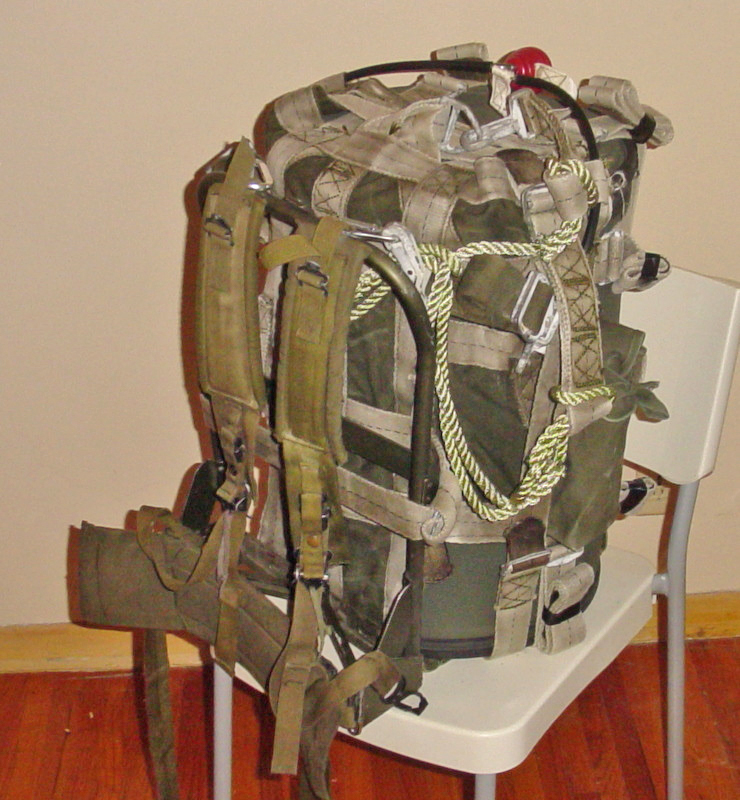
“For 25 years, during the latter half of the Cold War, the United States actually did deploy man-portable nuclear destruction in the form of the B-54 Special Atomic Demolition Munition (SADM).
“Soldiers from elite Army engineer and Special Forces units, as well as Navy SEALs and select Marines, trained to use the bombs, known as "backpack nukes," on battlefronts from
Eastern Europe to Korea to Iran — part of the U.S. military's effort to ensure the containment and, if necessary, defeat of communist forces.”

“In 1958, when the Army came knocking for an atomic demolition munition that could be carried by a single soldier, the AEC looked to the Crockett's (Davey Crockett was an atomic rifle) lightweight Mark 54 warhead for its solution. The resulting weapon would be a smaller, more mobile version of the ADMs. The Army, though, would have to share the device with the Navy and Marine Corps.
“The AEC's final product — the B-54 Special Atomic Demolition Munition — entered the U.S. arsenal in 1964. It stood 18 inches tall, encased in an aluminum and fiberglass frame. It rounded to a bullet shape on one end and had a 12-inch-diameter control panel on the other. According to an Army manual, the weapon's maximum explosive yield was less than 1 kiloton — that is, the equivalent of a thousand tons of TNT. To protect the bomb from unauthorized use, the SADM's control panel was sealed by a cover plate secured by a combination lock. Glow-in-the-dark paint applied to the lock allowed troops to unlock the bomb at night.

“When hauling the weapons on foot, things were even more difficult. Dan Dawson, an ADM engineer, remembers how difficult it was to run with a backpack nuke. During a training exercise, his unit simulated a mission to blow up a railroad tunnel but found it difficult to move a SADM across a patch of open ground.
"To get [the SADM backpacker] across this open area in a hurry, two of us, one on each side, had to support him under his arms and trot with him across this open area. You could carry it, but you couldn't run with it."

“As Cold War tensions abated, the United States began recalling SADMs to the continental United States. The weapon was officially retired in 1989, with the departments of Defense and Energy declaring that it was "obsolete" and that "there was no longer an operational requirement" for it.”

TG here again… All of this begs the question, where did all these weapons go after it was declared obsolete? I’m sure the official answer is they were safely all accounted for, decommissioned and the nuclear material safely disposed of. Yeah, sure. TG has no doubt that there’s a couple of these things hanging from hooks in some old guy’s garage, sitting on dusty racks in an armory somewhere or hidden away by a right-wing nutter General who’s balanced on the edge of using them to re-establish America as the greatest Goddamn country in the world.

At any rate, Thriller writers, there you go, have at it. And if that isn’t enough for you, there’s always the Davy Crockett nuclear rifle mentioned above. I’m sure there are a couple of them still kicking around somewhere as well.

Wednesday, February 5, 2014

This Blog is Not About Philip Seymour Hoffman


Blah blah blah blah blah blah blah blah blah. Blah blah blah blah blah blah blah. Needle stuck in his arm. Blah blah blah blah blah blah blah blah blah blah. Blah blah blah blah blah blah. Blah blah blah blah blah blah blah blah blah blah. Blah blah blah blah blah blah. Seventy packets of heroin scattered around the world. Blah blah blah blah blah blah blah blah blah blah. Blah blah blah blah blah blah. Blah blah blah blah blah blah blah blah blah blah. Blah blah blah blah blah blah. Moron.


As readers of this blog know by now, Thriller Guy has no qualms about speaking ill of the dead. Yes, TG understands that it’s a disease, that he had his demons, blah blah blah blah blah blah. He also had a wife and three kids. He wanted to get high. He died doing it. Three more words: selfish, selfish, selfish.

One good thing to come out of the sorry affair (man, even TG thinks that’s a pretty cold statement) is that everybody is running all their old radio interviews they had with Hoffman. He was a very smart, interesting guy and gave intelligent interviews. TG was listening to a 2009 interview with Terry Gross and he said something that resonated with TG. He was talking about acting, but TG related it to writing. She asked him about how he had once said that acting was tremendously difficult, and he really struggled with parts of it. He said when you’re on a movie set, it’s usually for ten or twelve hours a day and that entire time you had to keep the character you were playing constantly in your head. Otherwise you might lose the sense of him, and that it took an enormous amount of concentration, which was very difficult. TG’s thought was, if you think it’s hard to act a character, you should try creating one and getting him down on paper over a period of hours, days, months and years. Think it’s hard to keep a character in your head for 10 hours? Try ten months.

And while you’re at it, try doing it with every other character in a book, all at the same time. And then put them all in various scenes that make sense and add up to a compelling story. You want to talk about concentration? But enough about Philip Seymour Hoffman.

The above led TG to think about how he goes about writing a scene: what does it look like inside his head? How exactly do you do it? TG (Allen Appel’s alter ego) starts writing while envisioning a scene, like a movie, except the scene is full blown, not flat like it’s being projected. If there are no characters, the scenery gets described. Then there are characters in the scenery, and they talk, one at a time, usually. Each time a character talks, it is as if there is a camera recording what is happening: first, from TG’s mental POV, (which is usually the main character’s POV) which is usually looking at another character to whom he is speaking. When the second character speaks, the “camera” shifts to that character so TG can record what he/she is saying (making up this dialogue) and see what effect it is having on the first character. These effects are then (sometimes) noted. (“Albert could see that his words had hurt. Jim looked down at his feet, considering his response. Or maybe he would just punch Albert instead.”) Usually TG will run a scene like this, or a section of the scene) through his mental projector before writing it down. Then he writes it down, and continues on within the scene or on to the next scene. Remember, the next scene has to reflect the last and at the same time move the action forward. Not only are you keeping the initial scene in your head, you’re writing the present one and thinking ahead to the next. And you are doing this from the viewpoint of all the characters at the same time.

Man, this is really hard to describe. Talk about concentration. Now TG’s head hurts.

But here’s a secret. All the above machinations that go into warming up the engine of the mind and getting settled and in gear can slip away almost without notice, and, if you’re lucky, morph into the background where they do their job silently. The mind, the story, the unconscious takes over and the writer writes only dimly aware that he is doing so; he becomes the story and simply, without conscious thought, records it through the medium of the keyboard or pen. You will often hear writers say, “The story just takes over me, I just record what it says to me.” And as phony as this sounds, it is exactly what happens if one is lucky. We used to call this “being in the zone” and maybe that’s still what they call it, and it is a true thing and it is a wonderful place to be. Hours can go by while you are in the grip and you then emerge, blinking, dazed back into the real world and you look around and wonder, where have I been? You’ve been in your own world, brothers and sisters, and TG understands, give it a few minutes, soon enough you’ll be faced with life’s usual problems to say nothing over your story’s usual problems. But for a while, you have been on your own journey, your own world, your own dream and that can be a wonderful place to be.

Concentrate, yes. It’s hard work. But also…

Dream.

Sunday, January 26, 2014

How Many Words Did You Write Today?


Many years ago TG was having a conversation with his pal writer Henry Allen. We were
discussing a mutual writer friend who was working on a novel and had been working on it for some time. TG asked Henry how far along he was on it, how many words he had written. Henry laughed. “He says he has no idea how many words he has written, that he doesn’t think that sort of thing is important. Bullshit. Every writer knows how many words he has done, down to the single digits.” TG agrees. Every professional writer TG knows keeps a careful word count. Words are more precious than gold and watching them mount up is little different than watching Scrooge McDuck bathe in his basement coin vault. (When TG was a lad he used to daydream about Scrooge rolling in these coins. Could it be true? A quick internet search reveals that to replicate the vault would take 32.6 billion dollars in coins.)

A novelist knows that a “regular” novel should be between 80,000 and 120,000 words, though agents and publishers these days discourage more than 100,000 words because of printing costs. That’s the number you aim for, and every day after work you tote up a tally so you can see how far you’ve come. You think “a third of the way, half the way, three-quarters there,” and are solaced by how far along you are, or upset at how far you have to go. It’s kind of like if you’re on a diet: every day you step on the scale and assess the results.

The other day TG was trolling the book blogs and came upon one of Keith Thompson’s entries on the subject. TG is going to lift a big chunk of the blog and add some stats he dug up on his own. Keith Thomson is a thriller writer (among other types of books). Thriller Guy reviewed two of his books, Once a Spy and Twice a Spy and thought they were terrific. Here’s Keith.

I’ve noticed a lot of writers posting their daily word output on social media. The single common denominator of these posts, unfortunately, has been word counts that exceed my own. In hope of feeling better, I compiled some data on the typical daily productivity of writers I admire. What follows is a selection that provides a representative sample. Bear in mind that no heed is given to the relative merits of such numbers, and, as Mark Twain said, “There are three kinds of lies: lies, damned lies and statistics.”
Speaking of Twain, every morning he would get up and eat a hearty breakfast, then go to his study to write, staying there until about five, except in case of emergency—if anyone needed him, they had to sound a horn. The result was 1,000 words per day.
In his book On Writing, Stephen King says that he writes 2,000 words a day without fail, even on holidays. And that’s with no adverbs.
Lee Child uses word counts as mile markers. His record is 4000 words in a single day. His low is 600. His average: 1800. It takes him 80-85 working days to complete a book, but not 80-85 consecutive days, because he tends to (not?) write for more than four days in a row.
Trollope, too, wrote by volume. He put his pocket watch on his desk next and produced 500 words every thirty minutes for three hours—a daily total of 3,000 words.
In contrast, Hemingway clocked in at just 500.
Tolkein wrote The Lord of the Rings trilogy—670,000 words—in eleven years. That’s about 250 words per working day.
Tom Wolfe’s A Man in Full is 370,000 words long. Writing it took him eleven years, of which he says, “My children grew up thinking that was all I did: write, and never finish, a book called A Man in Full.”  The average: 135 words per day.
Jack London: 1500 words per day, every day. Before breakfast. Norman Mailer and Arthur Conan Doyle were both 3,000-words-per-day guys. Anne Rice hits 5,000. The Babe Ruth of this category is Michael Crichton, who routinely hit the daily ten grand mark.
Thankfully we also have Graham Greene, who counted each word, and would stop for the day at 500, even if he were in the middle of a sentence. Maya Angelou, who each day writes about nine pages, but saves just three. James Joyce, who proudly considered the completion of two perfect sentences a full day of work. And Dorothy Parker, who frequently wrote as few as five words—of which, she said, she changed seven.
TG here. TG would like to add that Twain, on arising in the morning, would have a shot of whiskey before brushing his teeth. His wife had strict instructions to have the shot in his bathroom when he climbed out of bed. (TG would like to remind readers that Twain is a major character in the Pastmaster series of novels by Allen Appel. Find him in Twice Upon a Time, now available as a Kindle, as are all five of the series.)
  
Erle Stanley Gardner, author of the Perry Mason novels, wrote a million words a year, which is about thirteen pages each working day. Victor Hugo wrote twenty pages each day.  John Grisham wrote The Pelican Brief in one hundred days, and The Client in six months.  Samuel Johnson often produced forty printed pages in a day.

And some writers are markedly slow.  More on Greene. According to the legendary Simon & Schuster editor Michael Korda, Graham Greene “without crossing out anything, and in neat, square handwriting, the letters so tiny and cramped that it looked like an attempt to write the Lord’s Prayer on the head of a pin, wrote over the next hour or so exactly five hundred words.”

Rudyard Kipling worked in the middle of the day, from ten until four.  John O’Hara would write all night, then would rise in the late afternoon.  Anne Perry says, “I work probably eight or nine hours a day, six days a week.”  After much procrastination, Harold Robbins would lock himself in a hotel room, hide the clocks, and work round-the-clock to exhaustion.

And King has now recanted this oft quoted fact, the 2,000 words a day, saying that 1,000 words is more like it and that he doesn’t really write every single day. But the guy has a roomful of excellent books to prove his massive output. See below for another King description of his output.

King works on his new novel in the mornings. “Afternoons are for naps and letters.  Evenings are for reading, family, Red Sox games on TV, and any revisions that just cannot wait.  Basically, mornings are my prime writing time.” 
From an interview with Neil Gamin, King writes every day. If he doesn't write he's not happy. If he writes, the world is a good place. So he writes. It's that simple. “I sit down maybe at quarter past eight in the morning and I work until quarter to twelve and for that period of time, everything is real. And then it just clicks off. I think I probably write about 1200 to 1500 words. It's six pages. I want to get six pages into hardcopy.”

So how many words do you write or try to write each day? And how do you feel if you make your goal, or don’t make your goal? TG would like to point out that this blog entry comes in at 1300 words. Just about exactly what Stephen King shoots for. Unfortunately, they’re not words that will be in the current novel that TG is working on. But that’s another blog entry.